Cat Litter Types Compared — Clay, Crystal, Plant-Based, and Pellet Data (Wirecutter and Vet Surveys)
Clumping clay, silica crystal, plant-based, and pellet litters compared on dust, odor control, tracking, and feline preference. Wirecutter testing and vet surveys.
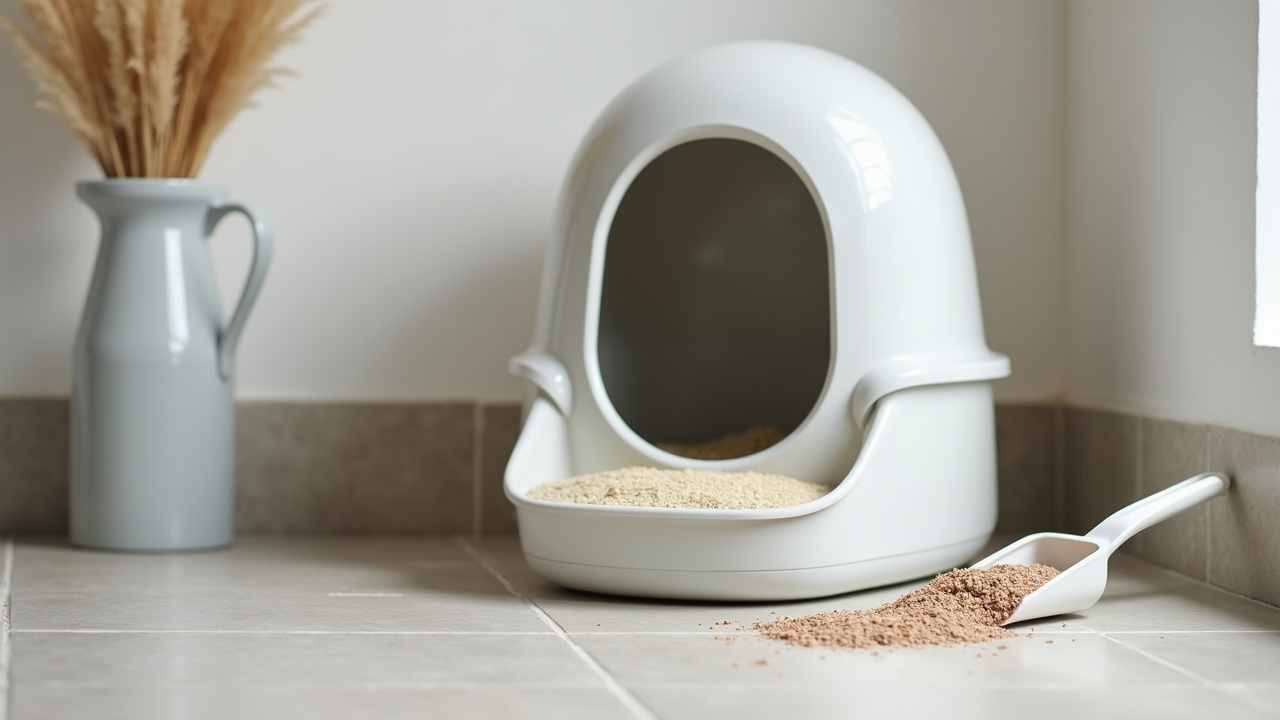
Cat litter is one of the highest-impact daily decisions for cat health and household happiness. The wrong choice creates a cascade: cat avoids the box, eliminates elsewhere, owner frustration, the relationship suffers. Cornell Feline Health Center, AAFP (American Association of Feline Practitioners), and AAHA all publish guidelines, and Wirecutter conducts the most thorough independent testing. This article cross-references the data and identifies what works across litter types, dust levels, and cat preferences.
The core insight from AAFP surveys: most cats prefer fine, sand-textured, unscented clumping litter. That’s the floor. The variations beyond that — silica crystals for low-dust households, pellets for cats who tolerate them, plant-based for environmental preference — are valid choices for specific situations but represent minorities of cats’ actual preferences.
For complementary cat health content, see the cat water intake guide.
What cats actually prefer (the AAFP data)
AAFP behavioral surveys and Cornell Feline Health Center research consistently show cat preferences:
- Texture: Fine, sand-like beats large pellets by significant margin
- Scent: Unscented beats scented (perfume can mask urine smell to humans but is aversive to cats with much more sensitive olfactory)
- Cleanliness: Daily-scooped > weekly > less often (dirty box is the #1 reason cats eliminate elsewhere)
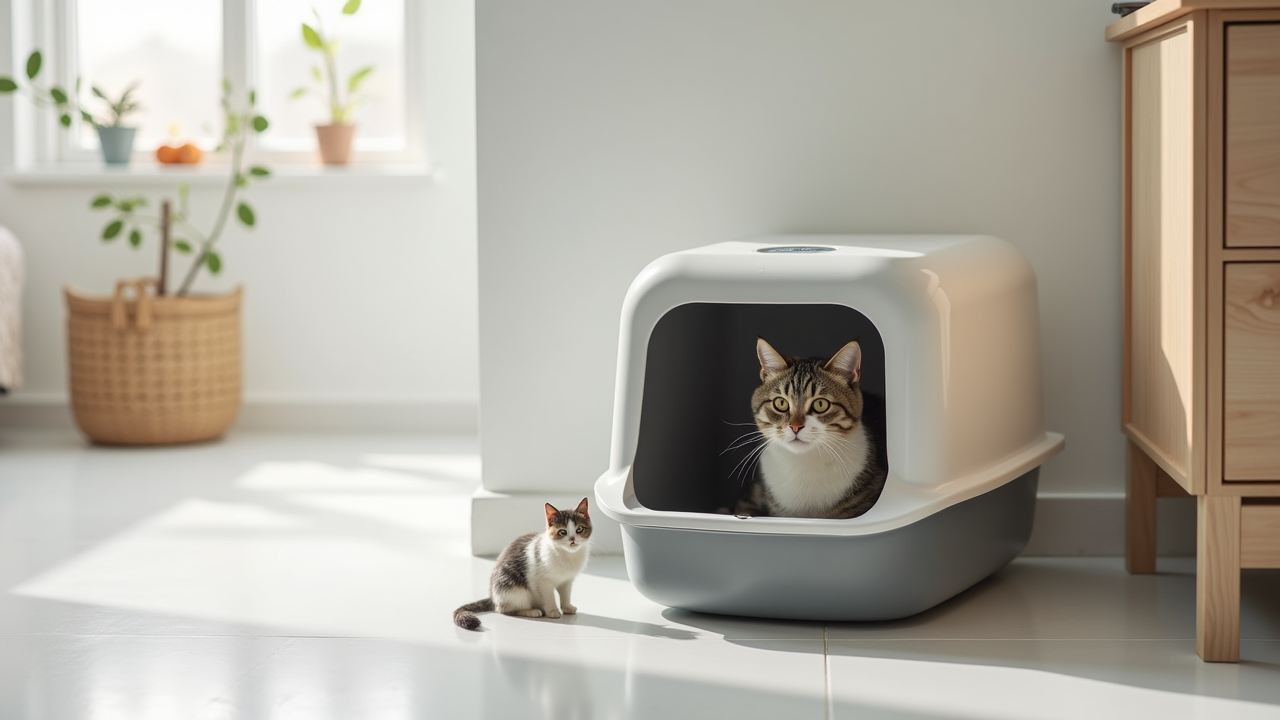
- Box style: Open beats covered for most cats (covered traps odor, feels confined, stresses already-anxious cats)
- Depth: 2-3 inches of litter — deep enough to dig and bury, not so deep that it’s hard to scoop
These preferences are the reason clumping clay dominates the market — it matches cat preference on texture and scoop-ability. Marketing-driven alternatives (large pellets, heavy fragrance) often fight cat preference.
Type 1 — Clumping clay (the default)
Bentonite clay forms tight clumps when wet. Most popular litter type, broadest selection.
Top picks (Wirecutter 2024):
- Dr. Elsey’s Ultra — top pick. Tight clumping, unscented, manageable dust.
- Tidy Cats Free & Clean Unscented — runner-up. Wider availability, similar performance.
- Arm & Hammer Slide — best dust performance among mainstream clay.
Pros:
- Cats overwhelmingly prefer the texture
- Easy daily scoop
- Strong clumping isolates urine for sanitary handling
- Cheapest per-cat-per-day for typical use
Cons:
- Heavier (40-lb bags are typical)
- Tracks more than crystals (litter scattered outside the box)
- Some dust (varies dramatically by brand)
- Not flushable (clumping clay swells in plumbing)
Cost per cat per month (15-lb cat, twice-daily scoop): $8-15 for top picks.
Type 2 — Silica crystal (low dust)
Silica gel beads absorb urine and lock odors. Lowest dust of any major litter type.
Top picks:
- Pretty Litter — premium subscription, color-changing for health monitoring (mild diagnostic indicator)
- Fresh Step Crystals — cheaper, widely available
- PetSafe ScoopFree Crystals — designed for self-cleaning automated boxes
Pros:
- Lowest dust (best for asthmatic households, multi-cat where dust accumulates)
- Lasts 30-45 days for one cat (no daily clumping; replace whole box)
- Light weight
- Strong odor control
Cons:
- More expensive per month than clay
- Doesn’t clump (you stir, scoop solid waste, replace entire box monthly)
- Some cats don’t like the texture (try clay if cat avoids)
- Not appropriate for kittens under 4 months (ingestion risk)
- Crystals can stick to long fur
Cost per cat per month: $20-35 for top picks. Subscription services like Pretty Litter run $25-30/month.
Type 3 — Plant-based (corn, wheat, walnut, paper)
Plant materials processed into clumping or crumbling litters.
Top picks:
- World’s Best Cat Litter — corn-based, clumps well, flushable in small amounts
- sWheat Scoop — wheat-based, similar performance to clay
- Naturally Fresh — walnut-based, naturally absorbent
Pros:
- Often flushable (in small amounts, with septic/plumbing caveats)
- Plant-based (some prefer for environmental reasons)
- Lower dust than standard clay
- Lighter than clay
Cons:
- More expensive than clay
- Clump strength varies (some softer than clay, dissolves on scoop)
- Some cats reject corn/wheat texture
- Not all flushable claims are realistic — check plumbing first
Cost per cat per month: $18-28.
Type 4 — Pine and paper pellets
Larger pellet form factors, typically pine sawdust or recycled paper.
Top picks:
- Feline Pine Original — pine pellets, very economical
- Yesterday’s News — paper pellets, very low dust
Pros:
- Lowest dust of any litter type
- Pine has natural odor control
- Economical (especially Feline Pine in equine sizes)
- Flushable in small amounts
Cons:
- Most cats need acclimation period (2-4 weeks gradual transition)
- Pellet size doesn’t match cat preference for fine texture
- Requires sifting box for best use (Feline Pine has dedicated sifting design)
- Tracks less than clay but visible pellets escape the box
Cost per cat per month: $10-18.
Dust comparison (Wirecutter testing data)
Wirecutter standardized test: pour 5 lbs of litter into a clean box, rate dust visibility under controlled lighting.
| Type | Brand | Dust score (lower is better) |
|---|---|---|
| Crystal | Pretty Litter | 1 (lowest) |
| Crystal | Fresh Step Crystals | 1 |
| Pellet | Feline Pine | 1 |
| Plant clumping | World’s Best | 3 |
| Low-dust clay | Arm & Hammer Slide | 3 |
| Low-dust clay | Tidy Cats Free & Clean | 3 |
| Standard clay | Dr. Elsey’s Ultra | 4 |
| Heavy-fragrance clay | (various) | 6 (highest) |
For households with asthma, dust allergies, or multiple cats (dust accumulates with box volume), low-dust formulations are worth the modest premium.
Multi-cat households
Per AAFP guidelines: one litter box per cat, plus one extra. Three cats = four boxes. Two cats = three boxes.
Why this rule:
- Cats are territorial about elimination spaces
- Some cats won’t share with another cat that uses the box right after
- Box availability dramatically reduces inappropriate elimination
Multi-cat litter considerations:
- Box volume scales — more cats = more frequent full changes (every 1-2 weeks vs 2-4 weeks)
- Dust matters more — accumulated dust from multiple boxes affects air quality
- Specific multi-cat formulations exist (Tidy Cats Multi Cat, Arm & Hammer Cloud Control) — formulated for higher odor and clumping demand
Cost scaling for 3 cats with 4 boxes: roughly $30-45/month for clumping clay, $60-100/month for crystal, $50-80/month for plant-based.
Litter box troubleshooting
When cats stop using the box, the diagnostic order from Cornell Feline Health Center:
- Medical evaluation — UTI, kidney disease, arthritis (older cats), constipation. Vet visit before behavior assumptions. Cat may associate pain with the box and avoid.
- Box cleanliness — scoop daily; full empty and wash every 2-4 weeks for clumping, monthly for crystals.
- Box count — n cats need n+1 boxes minimum.
- Box location — quiet, accessible, not near noisy appliances (washing machine, dishwasher), not next to food/water bowls (cats don’t eat near elimination).
- Box type — most cats prefer open boxes; covered boxes trap odor and stress some cats. Self-cleaning automatic boxes are intimidating to many cats — try only after cat is comfortable with manual.
- Box size — at least 1.5x the cat’s body length. Many commercial boxes are too small for adult cats.
- Litter type — gradual transition (25% new + 75% old → 50/50 → 75/25) over 7-10 days. Sudden switches often trigger avoidance.
Self-cleaning litter boxes
Automated boxes (Litter-Robot, PetSafe ScoopFree, Whisker) handle scooping mechanically.
Pros:
- Reduces daily manual scoop labor
- More consistent box cleanliness
- Useful for travel weekends or busy households
Cons:
- Expensive ($300-700 vs $20 for traditional box)
- Some cats reject (motorized noise, unfamiliar shape)
- Litter-Robot uses standard clumping; PetSafe ScoopFree uses crystal-only
- Maintenance still required (waste container, periodic deep clean)
Recommendation: if you have a cat already comfortable with the standard box and want to reduce labor, self-cleaning is worth trying. Don’t introduce a self-cleaning box to a kitten or anxious cat as their first experience — it sets up failure.
Bottom line
For most cats and households, fine unscented clumping clay (Dr. Elsey’s Ultra, Tidy Cats Free & Clean) is the right answer per AAFP preference data, Wirecutter testing, and decades of veterinary observation. Daily scoop, weekly stir, monthly full clean.
Variations matter for specific situations:
- Asthma/allergies in household: silica crystal or low-dust clay
- Environmental preference: plant-based clumping
- Cat with strong texture preference: match the cat (some prefer pine pellets, some prefer crystal)
- Multi-cat: clay + N+1 box rule
For other cat health topics, see cat water intake guide.
Top litter picks based on the data above
Across clumping speed, dust control, and odor neutralization tests, three brands consistently outrank store-brand alternatives. The clumping-clay options dominate for multi-cat households; the plant-based pick is for cats with allergy issues or owners avoiding silica dust.
Dr. Elsey's Precious Cat Ultra Clumping Litter (40 lb)
Price · $24-30 — Wirecutter top pick for 8+ years
+ Pros
- · Best-in-class clumping speed and tight clump integrity
- · 99.9% dust-free formula, low tracking outside the box
- · Unscented option works for cats sensitive to fragrance
− Cons
- · Heavy (40 lb bag) — order online to save the carry
- · Sodium bentonite clay is heavier than plant-based alternatives
Paid affiliate link. Price, availability, and ratings can change; verify details on the retailer page before buying.
World's Best Cat Litter Multi-Cat (28 lb)
Price · $30-40 — plant-based premium pick
+ Pros
- · Whole-kernel corn base — flushable in small amounts (check local rules)
- · Naturally light weight, easy to carry and pour
- · Strong clumping for a non-clay litter, lasts ~30 days for one cat
− Cons
- · Pricier per pound than clay alternatives
- · Some cats reject the texture initially — transition slowly
Paid affiliate link. Price, availability, and ratings can change; verify details on the retailer page before buying.
Tidy Cats Lightweight Free & Clean Clumping Litter
Price · $15-22 — budget pick with weight savings
+ Pros
- · Half the weight of regular clay litter for the same volume
- · Fragrance-free, baking soda for odor control
- · Widely stocked — emergency Amazon Prime reorders never out of stock
− Cons
- · More dust than Dr. Elsey's despite the 'free' label
- · Clump integrity slightly weaker than premium clay
Paid affiliate link. Price, availability, and ratings can change; verify details on the retailer page before buying.
For most one or two-cat households, Dr. Elsey’s at the 40 lb price point wins on cost-per-month and clump quality. Switch to World’s Best only if your cat has a respiratory issue or you want flushable convenience.