Cat Scratching Post Research — Why Cats Scratch (2026)
Cats scratch for nail maintenance, scent marking, and stretching. Vertical vs horizontal posts, sisal vs cardboard, and which design ends furniture damage.
Cat scratching is one of the most frequently misunderstood behaviors. Many owners view it as misbehavior to be stopped, attempt punishment-based interventions, or in extreme cases pursue declawing — all of which fail because scratching is a biological need cats can’t suppress. The successful approach is providing scratching options the cat actually wants to use, in the right locations, with the right materials.
This article explains the biology of cat scratching, the design specifications that make scratching posts effective, and the placement strategy that redirects furniture scratchers. The conclusion is that proper scratching infrastructure ends most furniture damage within 1-2 weeks at a one-time cost of $50-150.
- Why cats scratch (the three biological functions)
- Vertical vs horizontal post preferences
- Material choices — sisal beats carpet beats foam
- Placement strategy that redirects furniture scratching
- Top picks across $20-130 budget range
The biology of cat scratching
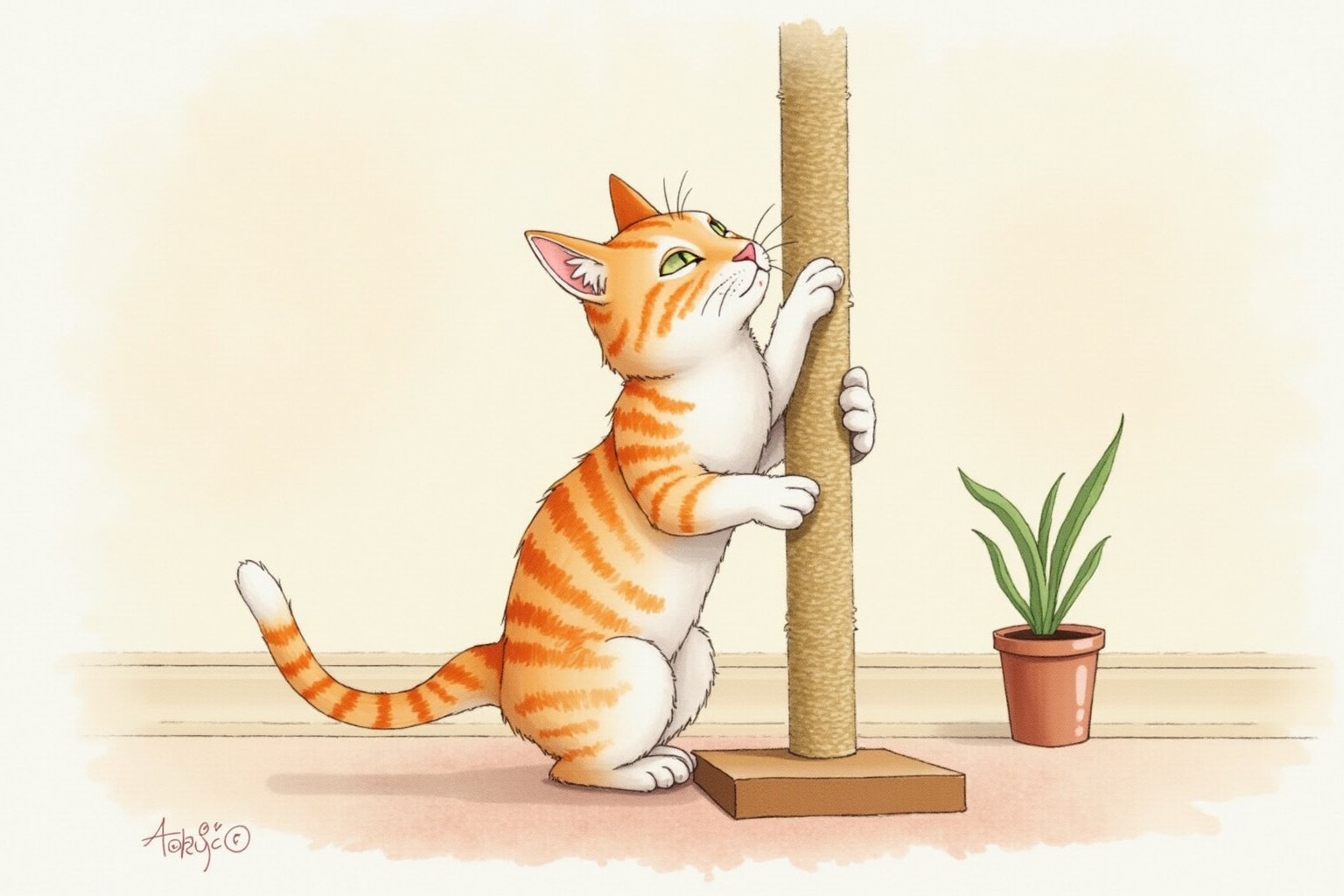
Cats scratch for three distinct biological purposes:
1. Nail maintenance: Scratching removes the dead outer sheaths from claws, exposing the sharp new growth underneath. Indoor cats (especially senior cats) sometimes have overgrown claws if they don’t scratch regularly; this can lead to ingrown claws and pain. Active scratching prevents this naturally.
2. Scent marking: Cats have scent glands in their paws (between toe pads and digital pads). Scratching deposits these scent markers on the scratched surface, creating both visible territorial marks (the scratches themselves) and chemical markers detectable by other cats. This is why cats prefer to scratch in highly visible, central locations rather than hidden corners.
3. Stretching: A full vertical scratch involves extending front legs forward, arching the back, and stretching shoulder and leg muscles. The morning post-nap scratch is essentially feline yoga.
These functions are not optional behaviors — cats will scratch regardless of consequences. The owner’s role is to channel this need to appropriate surfaces.
Vertical vs horizontal preference
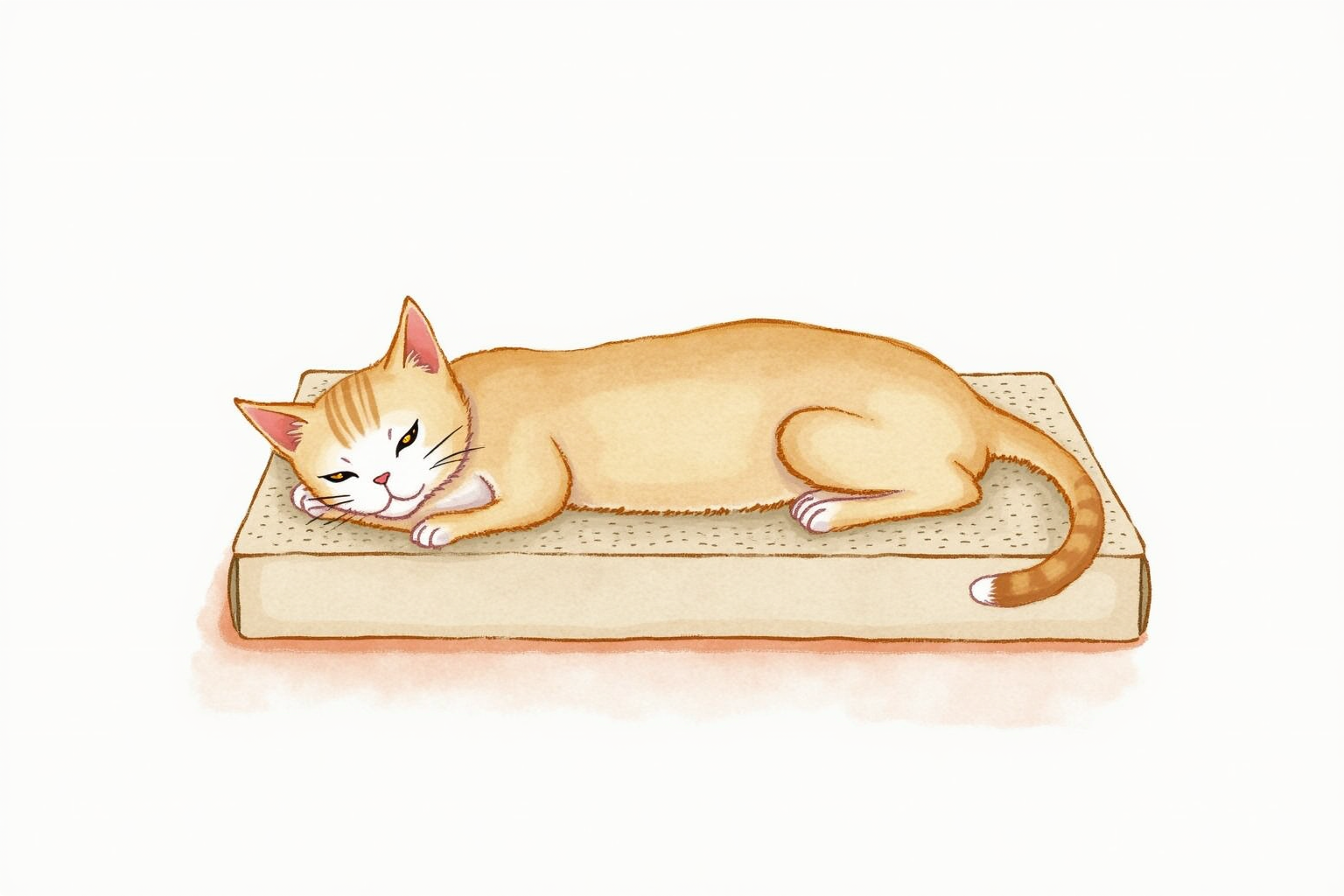
Most cats strongly prefer vertical scratching posts, where they can fully extend their body upward.
Vertical advantages:
- Allows full stretch (back, shoulders, legs)
- Higher visibility for scent marking purpose
- Greater resistance allows satisfying claw engagement
- Most natural feline scratching posture
Vertical requirements:
- Minimum 30 inches tall for adult cats
- Stable base (wobbling posts are unused)
- Sisal rope or sisal fabric covering (not carpet)
- Located in central, social areas of home
Horizontal options:
- Secondary preference for most cats
- Useful for nail maintenance specifically
- Corrugated cardboard scratchers are popular
- Provide as supplemental, not primary
Combination approach: Provide at least one tall vertical post (primary) plus 1-2 horizontal scratchers (supplemental) in different rooms. Multi-cat households need multiple of each.
Material preferences
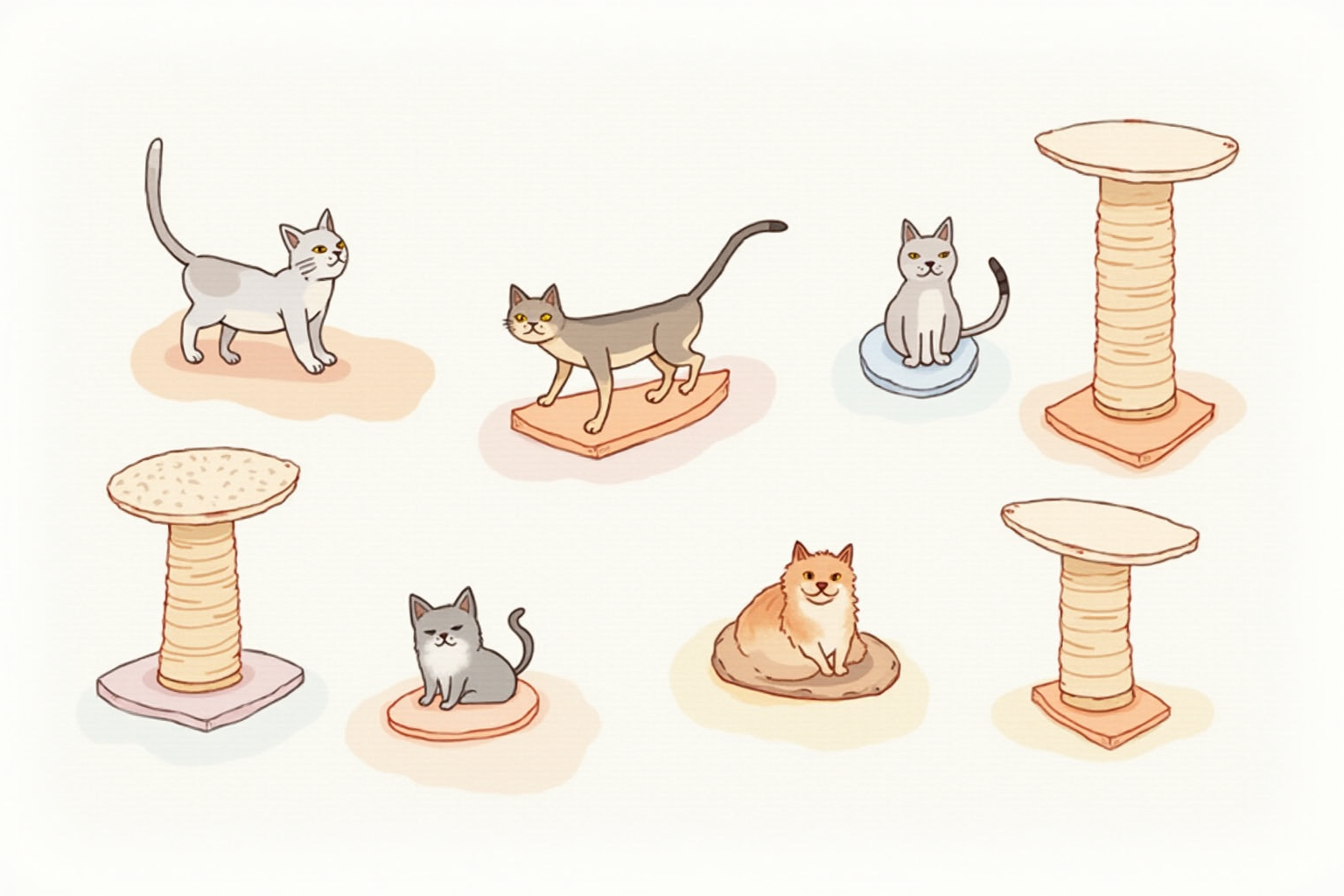
Material matters dramatically. The wrong material means the post goes unused while the cat continues furniture scratching.
Sisal rope and sisal fabric (best):
- Rough texture provides satisfying claw resistance
- Durable — withstands years of scratching
- Sound and texture mimic tree bark (cats’ ancestral preference)
- Premium posts (SmartCat, Frisco) use sisal
Cardboard (good):
- Excellent for horizontal scratchers
- Affordable and easy to replace as worn out
- PetFusion Ultimate, Catit Style scratchers use this
- Better for nail maintenance than scent marking
Carpet (poor):
- Many cats actually scratch the side of carpet rather than the post itself
- Less satisfying claw engagement than sisal
- Confuses cats — same material as their household carpet
- Avoid posts that use only carpet covering
Soft materials (avoid):
- Plush fabric, foam, fleece all fail
- Don’t provide claw resistance
- Cats ignore them
Placement strategy
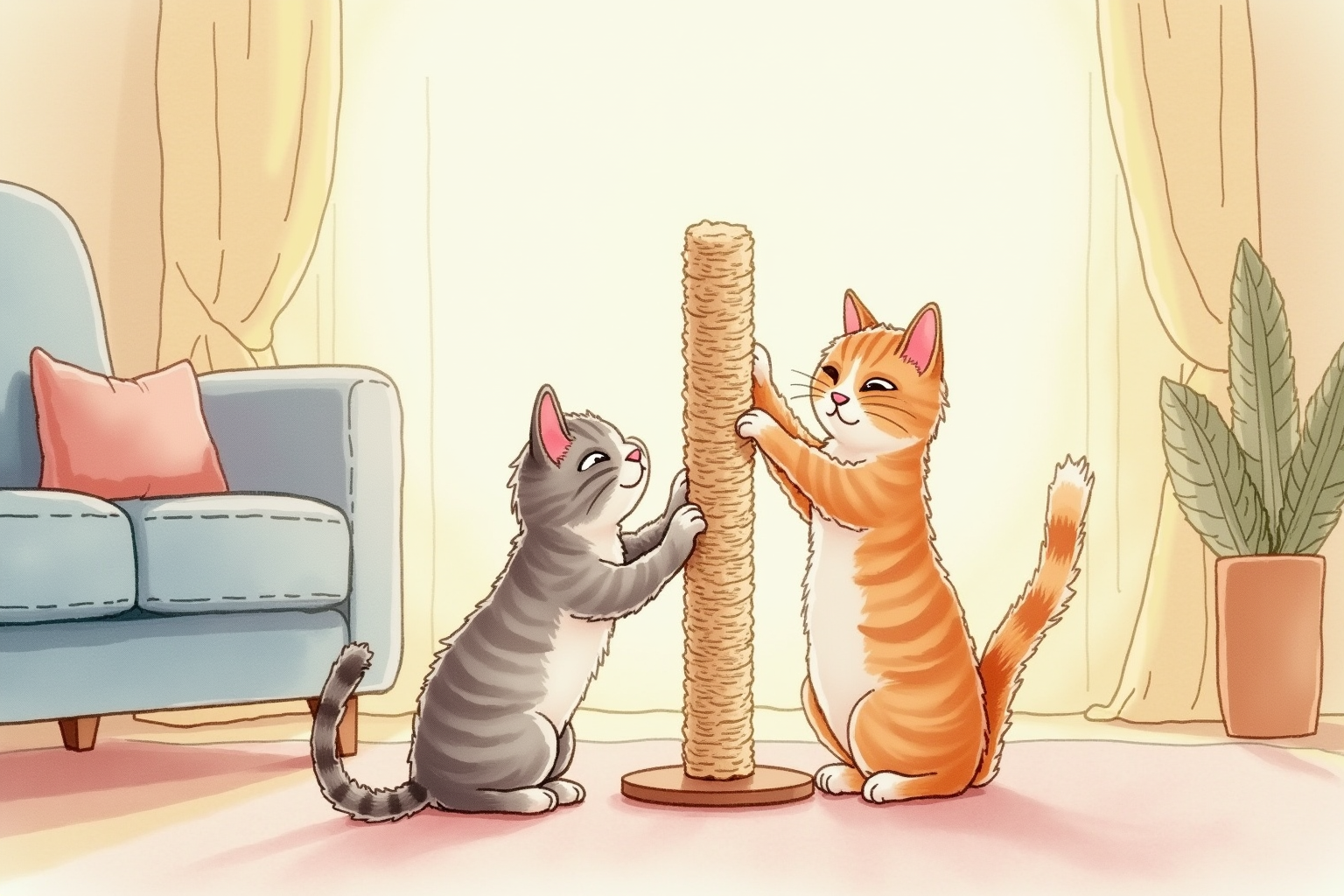
Where you put scratching posts determines whether they’re used. The standard rule: place posts near the items cats currently scratch.
Effective placement:
-
Next to scratched furniture: If your cat scratches the side of the couch, put the post directly beside that spot. Don’t expect the cat to walk across the room to a “designated” scratching area.
-
In central, social areas: Cats prefer to scratch in visible locations where their marks are seen. Hidden corners get minimal use.
-
Near sleeping/resting spots: Many cats scratch immediately after waking from naps. A post within 3-5 feet of their favorite napping spot will be heavily used.
-
Near entry points: When entering a room, many cats scratch as a “checking in” behavior. Posts near doorways see frequent use.
-
Multiple posts in different rooms: One post per major room is the minimum for households with adequate budget.
Common placement mistakes:
- Hidden corners or basements (cats won’t seek them out)
- High-traffic narrow spaces (cats feel exposed during the long scratch)
- Behind other furniture (out of sight, out of use)
- Single post in a multi-cat household (insufficient territory)
Redirecting furniture scratchers
For cats already scratching furniture, the redirection protocol:
1. Provide the right alternative in the right location
Tall sisal post directly beside the scratched furniture. Match the height and resistance the cat is getting from the furniture.
2. Make the furniture temporarily unattractive
- Double-sided tape (Sticky Paws) — cats dislike sticky paws
- Aluminum foil draped over the scratched area
- Citrus spray (cats dislike citrus scents)
- Plastic carpet runner (textured side up) on scratched areas
These deterrents are temporary (2-4 weeks). The goal is to break the habit while building the new habit with the post.
3. Reward post use
When you see your cat using the post, calmly praise or offer a treat. Make the post the rewarding experience.
4. Consider pheromones
Feliway diffuser ($30-50) helps in cases where scratching is anxiety-related. Reduces the marking-motivation component of scratching.
Most cats redirect to the post within 1-2 weeks of consistent application. Stubborn cases may take 4-6 weeks but almost always succeed.
Top picks across budgets
SmartCat Pioneer Pet Ultimate Scratching Post
Price · $60-90 — best premium pick
+ Pros
- · 32 inches tall — full stretch for any cat
- · Heavy stable base prevents tipping
- · Sisal-wrapped post is the gold standard material
− Cons
- · Premium pricing vs basic posts
- · Single-color minimalist design (limited aesthetic options)
Paid affiliate link. Price, availability, and ratings can change; verify details on the retailer page before buying.
PetFusion Ultimate Cat Scratcher Lounge (Curved Cardboard)
Price · $40-65 — best horizontal pick
+ Pros
- · Curved design doubles as resting spot and scratcher
- · Premium recycled corrugated cardboard
- · Replaceable scratching surface available separately
− Cons
- · Cardboard wears out within 6-12 months of heavy use
- · Larger footprint than basic flat scratchers
Paid affiliate link. Price, availability, and ratings can change; verify details on the retailer page before buying.
Frisco Sisal Cat Scratching Post (28-Inch)
Price · $25-40 — best budget pick
+ Pros
- · Affordable entry-level sisal post
- · Adequate height for most adult cats
- · Stable base in typical use
− Cons
- · Slightly shorter than ideal (28 vs 32 inches)
- · Less premium build quality than SmartCat alternatives
Paid affiliate link. Price, availability, and ratings can change; verify details on the retailer page before buying.
The buying decision
For most cat households, the right combination is one premium tall vertical post (SmartCat at $60-90) plus one horizontal cardboard scratcher (PetFusion Lounge at $40-65). Total: $100-150. This setup addresses both vertical stretch and horizontal nail maintenance needs.
For multi-cat households, double the count — at least one vertical post per cat plus 2-3 horizontal scratchers distributed throughout the home. The territorial requirements of multiple cats means insufficient resources create stress and competition.
For budget-conscious households, the Frisco 28-inch sisal post at $25-40 covers the basic need. Slightly less than ideal height but functional for most cats. Combine with a basic cardboard scratcher ($15-20) for the full setup at under $60.
Avoid carpet-covered posts and posts under 24 inches tall. These are the two most common reasons posts go unused. The slight cost saving on a cheap post often leads to continued furniture scratching while the post sits ignored.
Proper scratching infrastructure is one of the most under-appreciated cat care upgrades. The one-time investment ends furniture destruction, supports cat physical and psychological health, and lasts years. The math is straightforward: a $100 post prevents $1000+ in furniture damage over a cat’s lifetime.