Dog and Cat Heatstroke Prevention: Cars, Pavement, and First Aid
A vet-guideline based summer heat safety plan for dogs and cats: risk signs, hot cars, pavement burns, cooling first aid, and when to go to the ER.
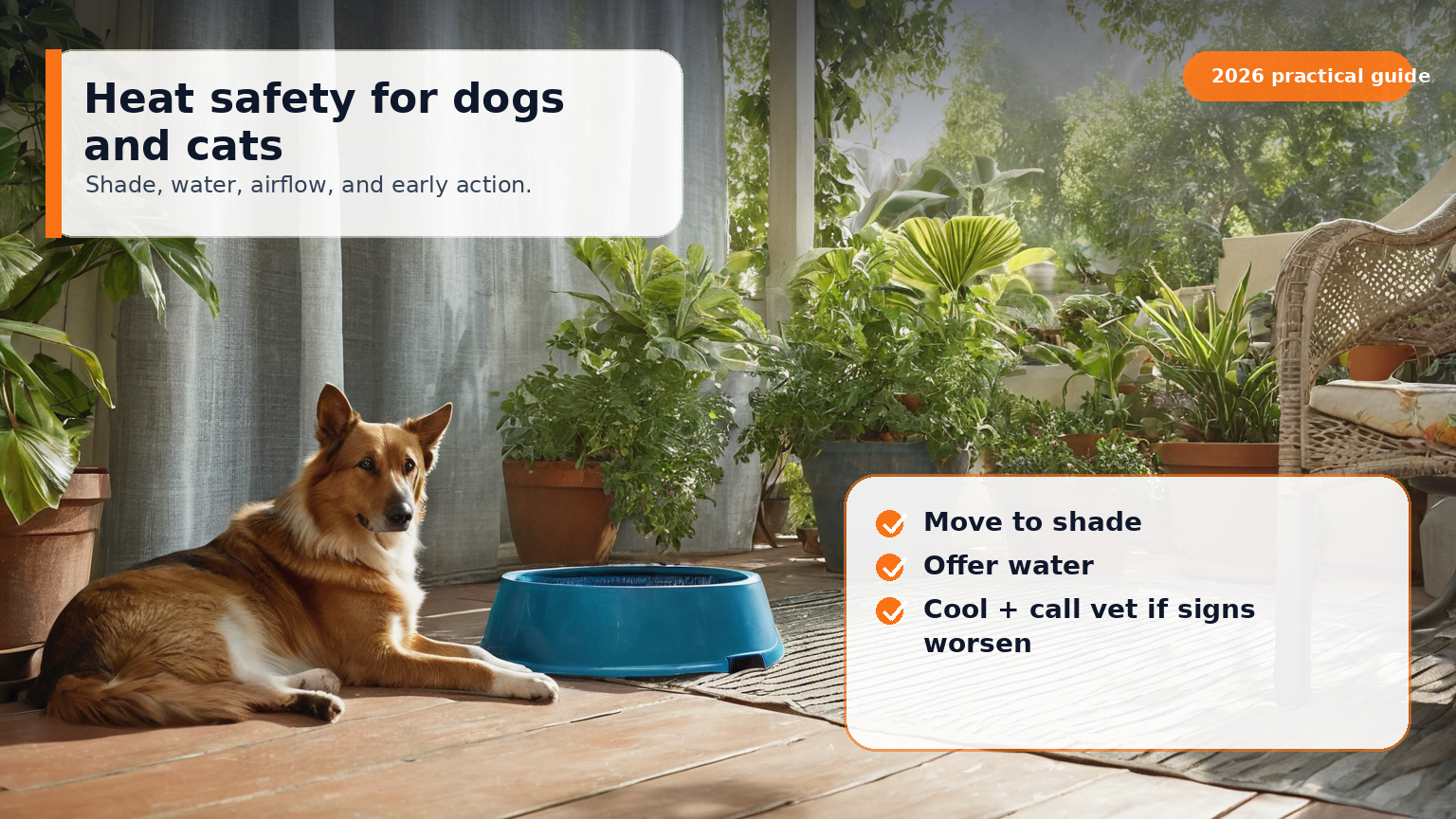
Updated May 25, 2026. This guide summarizes current public guidance from the AVMA, ASPCA, CDC heat-health materials, University Extension resources, and veterinary hospital first-aid references. It is educational, not a substitute for your veterinarian. Heatstroke can damage the brain, kidneys, gut, heart, and clotting system, so when signs are more than mild, the safest plan is cool while arranging veterinary care, not “wait and see.”
Heat illness in pets is not just a desert problem or a mid-afternoon problem. Dogs and cats can overheat on humid days, in parked cars, in poorly ventilated carriers, on sunny patios, during fetch sessions, and even inside warm apartments. Dogs are especially vulnerable because they rely heavily on panting and limited paw-pad sweating; cats usually avoid exertion but may be trapped in heat or show subtle signs until they are quite sick.
The practical goal is simple: build a routine that prevents temperature from climbing in the first place, then know exactly what to do if panting, weakness, drooling, or disorientation appears.
The 60-second heat safety rule
Before a summer walk, car ride, grooming trip, or outdoor event, ask four questions:
- Is my pet already in a higher-risk group? Brachycephalic breeds, senior pets, puppies and kittens, overweight pets, heart or airway disease patients, dark heavy-coated dogs, and animals taking some medications need a more conservative plan.
- Is there a cool exit? Shade is helpful, but air-conditioning is better when the animal is already struggling.
- Can I stop immediately? Heat illness often starts during “just one more block” or “just one more throw.”
- Do I know the nearest veterinary ER? Save the phone number before summer outings.
Signs: mild heat stress versus emergency heatstroke
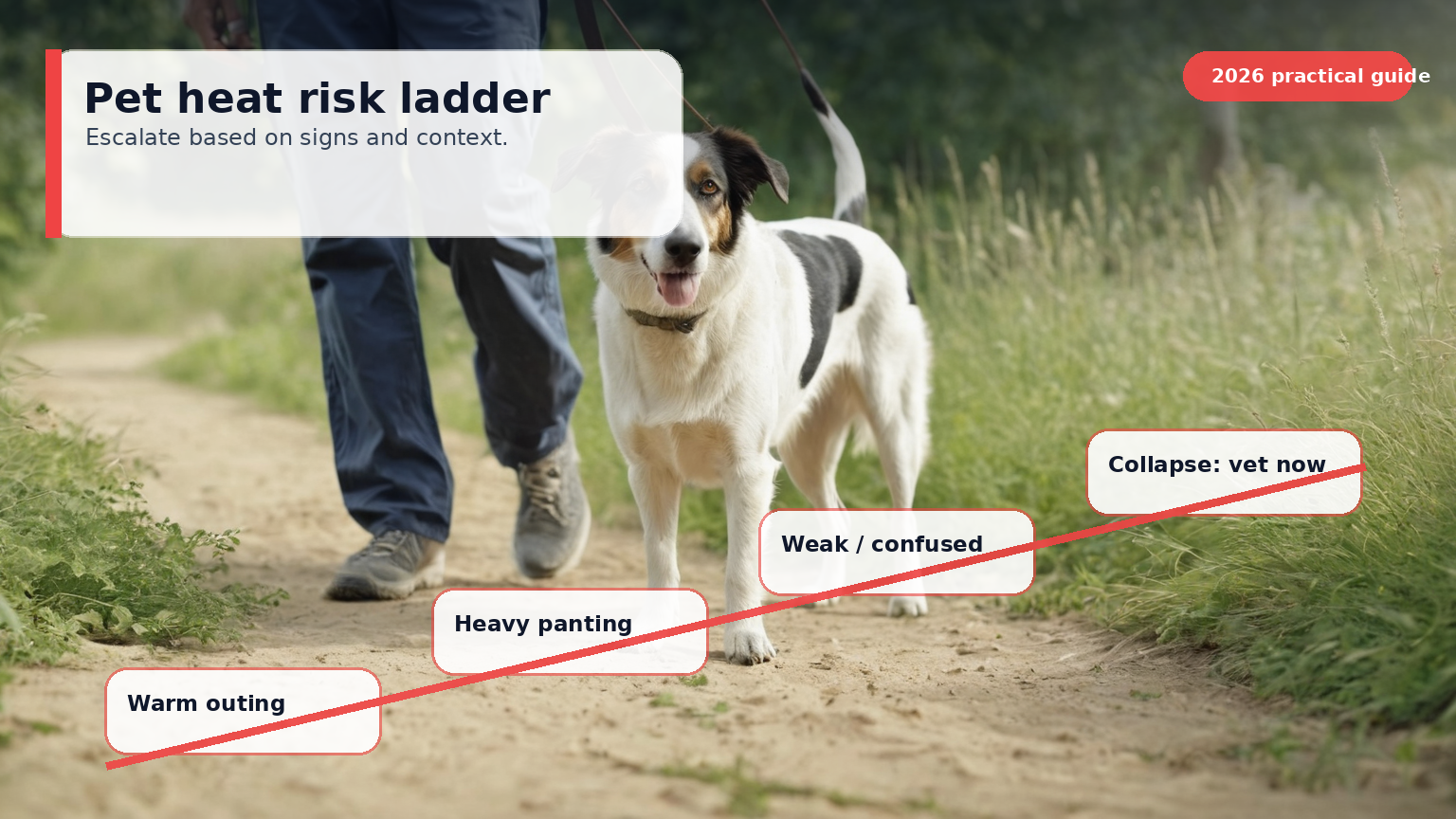
Panting alone can be normal after play. The concern is panting that does not settle with rest, or panting paired with other body changes. Cats deserve special caution because open-mouth breathing in a resting cat is never something to ignore.
| What you notice | What it can mean | Best next step |
|---|---|---|
| Panting after a short warm walk, still alert | Early heat load or poor conditioning | Stop, shade, water, go home by the coolest route |
| Heavy panting, bright red gums, thick drool | Heat stress progressing | Active cooling and call your vet |
| Slowing down, seeking shade, refusing to walk | The pet is self-limiting | Stop the outing; do not pull them onward |
| Vomiting, diarrhea, wobbling, confusion | Possible heatstroke or shock | Cool and go to urgent veterinary care |
| Collapse, seizures, blue/gray gums, unresponsive | Life-threatening emergency | Start cooling while someone calls the ER; transport now |
A rectal thermometer can help experienced owners, but do not delay first aid to find one. If you do measure and the reading is high, tell the ER team. If your pet is improving and no longer hot to the touch, avoid overcooling during transport.
Hot cars: no “quick errand” exception
The AVMA’s vehicle safety message is intentionally blunt: leaving pets in parked cars can be dangerous even when it does not feel extreme outside, and cracked windows are not reliable protection. A car acts like a greenhouse. Sunlight enters, interior surfaces absorb heat, and the enclosed air warms faster than many owners expect.
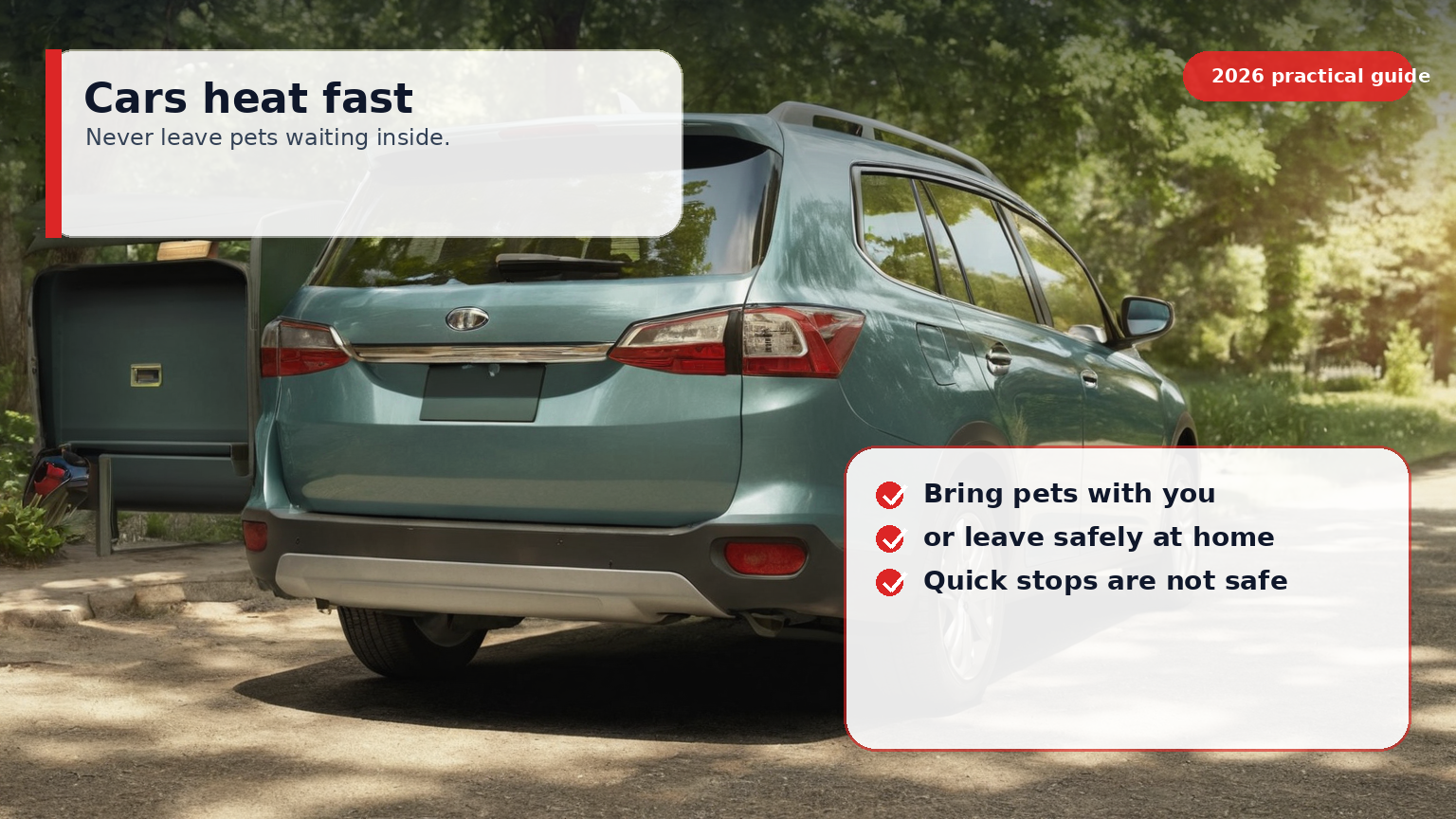
A common mistake is thinking, “I will only be gone five minutes.” Lines, payment delays, phone calls, or a locked door can turn five minutes into fifteen. For a dog or cat inside a carrier, the situation can worsen because the animal cannot move to shade, find water, or increase ventilation. If you are traveling alone with a pet, use drive-through options, curbside pickup, or a second adult who can keep the air-conditioning running with the animal under direct supervision.
Also remember that cargo areas and parked RVs can heat unevenly. A thermometer in the front seat may not represent the temperature where a crated pet is riding.
Pavement burns and the hand test
Paw pads are tough, not fireproof. Asphalt, concrete, brick, and artificial turf can become much hotter than the air temperature because they absorb solar radiation. The easiest field test is the hand test: place the back of your hand on the walking surface. If it is uncomfortable, it is not a good surface for a relaxed pet walk.
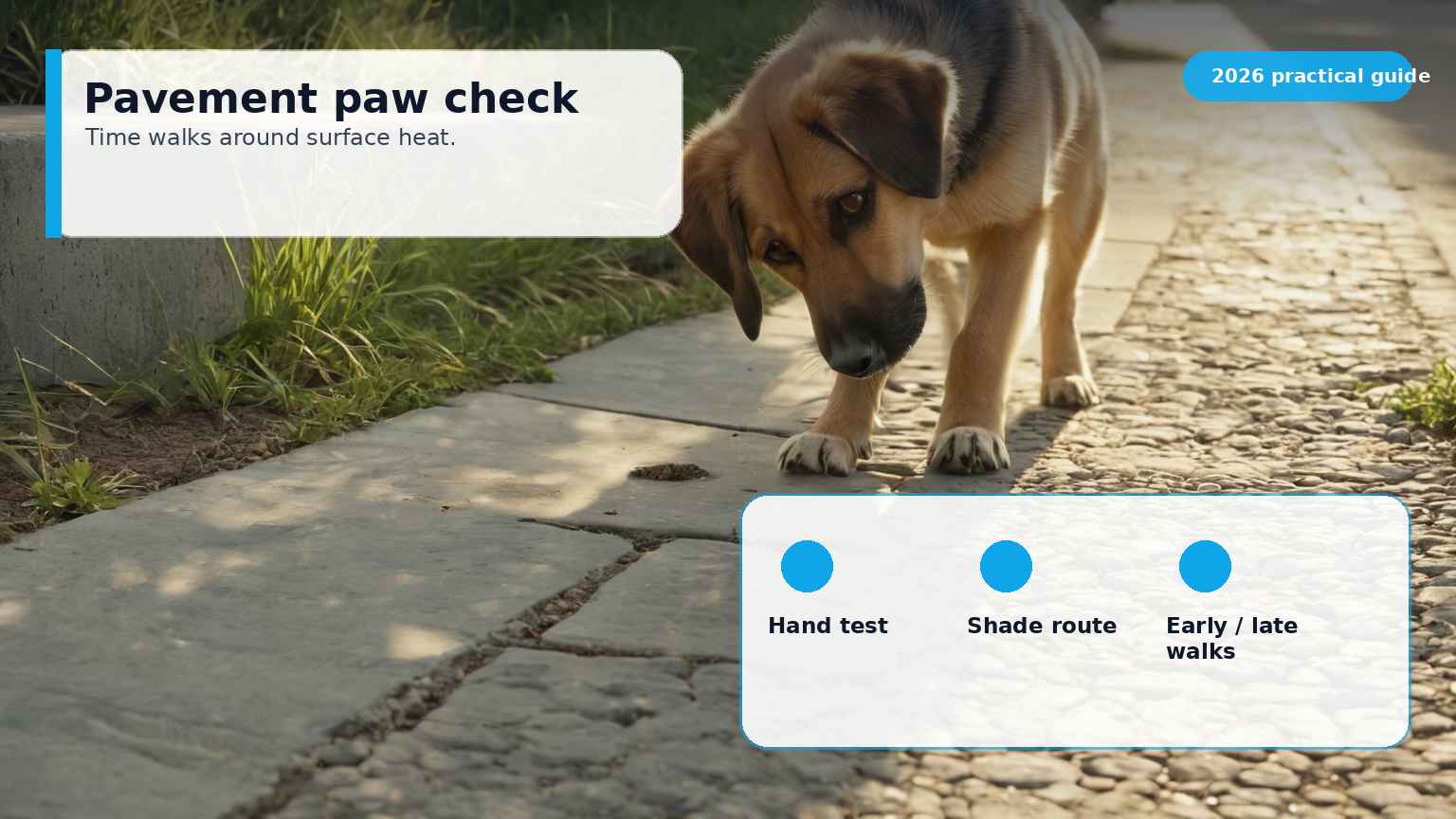
Safer walking choices include early-morning routes, shaded parks, booties that your dog has already practiced wearing, and shorter sniff walks instead of exercise walks. If you see limping, licking at paws, blisters, dark loose skin on pads, or sudden refusal to walk, stop and protect the paws from more contact. Burns need veterinary guidance because pad injuries are painful and can become infected.
Cooling first aid: what to do before and during transport
The best first aid is fast, calm, and simple. Move the pet out of heat. Wet the body with cool water, especially the neck, belly, armpits, groin, and paws. Add airflow from a fan, car vents, or natural breeze. Call the veterinary ER early so they can tell you whether to come in immediately and prepare for arrival.
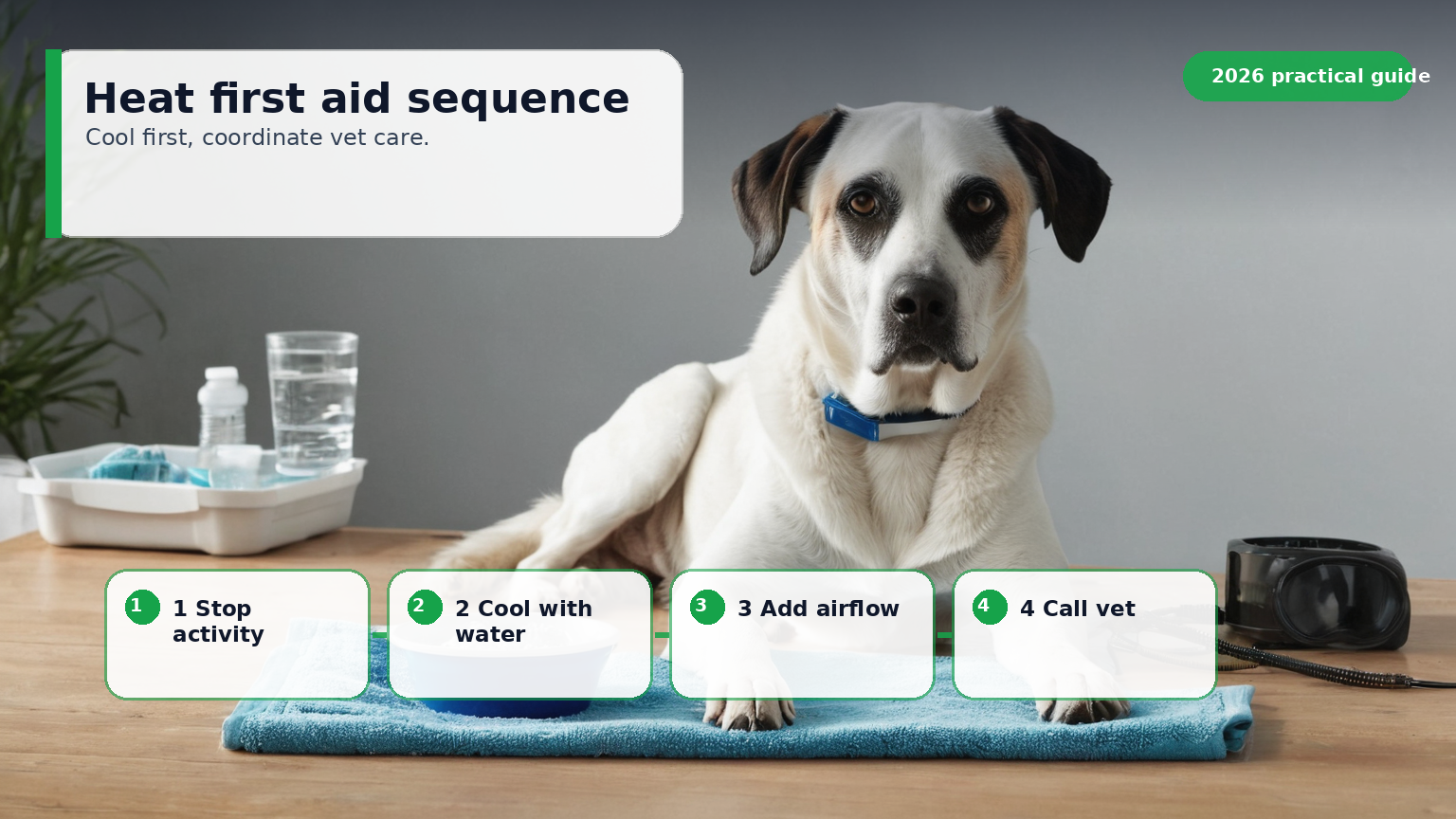
Avoid three well-intended mistakes:
- Do not force water into the mouth. An overheated or confused pet can aspirate. Offer small amounts only if the pet is alert and wants to drink.
- Do not use an ice bath at home. Cool water plus airflow is safer for most owners because ice-cold water may trigger shivering or reduce blood flow to the skin.
- Do not delay transport to finish cooling. If the pet is collapsing, seizing, vomiting repeatedly, or mentally abnormal, start cooling and go.
During transport, run the air-conditioning, keep wet towels light and refreshed, and avoid wrapping the pet tightly. A soaked towel that warms up can become insulation. If two adults are present, one can drive while the other monitors breathing, gum color, and responsiveness.
Why some pets overheat faster
Brachycephalic pets—such as French Bulldogs, English Bulldogs, Pugs, Boston Terriers, Persian cats, and other flat-faced breeds—have less efficient airway anatomy for evaporative cooling. Panting works by moving air across moist tissues; when airways are narrow or obstructed, cooling is less efficient and effort rises.
Senior pets, overweight pets, and animals with heart, lung, endocrine, or mobility disease can also struggle. A dog carrying excess weight may not keep up with a hot walk but may hide discomfort until exhausted. See the veterinarian-guided weight and body-condition plan for measuring change without using strenuous hot-weather exercise.
Cats face different traps. They may nap in a sunny room, greenhouse, garage, or screened porch and not be noticed until they are weak. They can also overheat in carriers during car delays or outdoor events. Cats that already need hydration support, such as those with urinary or kidney concerns, deserve an especially careful water and cooling plan; our cat hydration home plan covers bowl placement and moisture strategies.
A practical summer schedule
For most healthy adult dogs, swap “distance goals” for “temperature goals” during hot months. Walk early, keep midday outings for bathroom breaks, and reserve training games for indoors. If your dog loves fetch, set a timer and stop before fatigue appears. Ball chasing is risky because excitement can override the dog’s own stop signals.
For cats, focus on indoor environment: close blinds during intense sun, keep water stations away from litter boxes, provide airflow, and check that favorite hiding places are not trapping heat. In multi-cat homes, make sure a dominant pet is not blocking the coolest room.
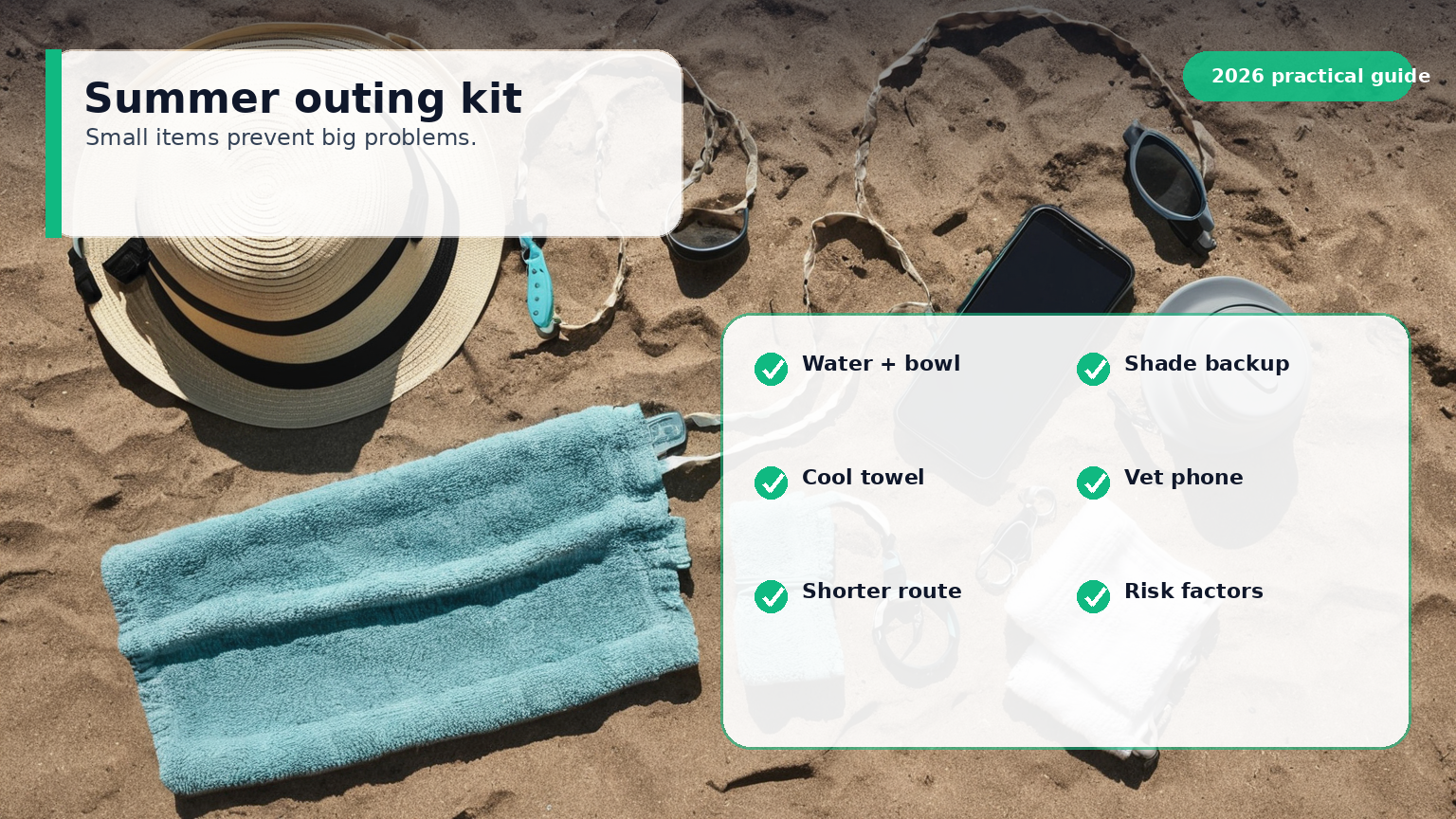
Summer outing checklist
Use this checklist before hikes, beach trips, dog parks, outdoor cafes, and road travel:
- Water for the pet, not just for people.
- A collapsible bowl that is easy to offer every 10–15 minutes during active outings.
- A shade plan: trees, canopy, vehicle with supervised A/C, or an indoor exit.
- A cooling towel or extra water for wetting the coat if needed.
- Paw protection if surfaces may be hot, plus practice sessions before the trip.
- The nearest veterinary emergency clinic saved in your phone.
- Parasite prevention appropriate for the species and area; the cat product-safety plan also explains why dog and cat products must remain separated in a mixed-pet home.
When to call the vet versus monitor at home
Call your veterinarian the same day if your pet had heavy panting that took longer than expected to settle, seemed weak, vomited once after heat exposure, developed diarrhea, or has burned paw pads. Go to urgent or emergency care immediately for collapse, seizures, repeated vomiting, bloody diarrhea, disorientation, pale/blue/gray gums, severe lethargy, or breathing that remains labored in a cool place.
The reason for caution is delayed injury. A pet can look somewhat better after cooling but still have internal damage that needs fluids, temperature monitoring, bloodwork, oxygen, anti-nausea medication, or treatment for shock and clotting problems. Veterinary teams can also decide whether the pet is stable enough to go home.
Source notes
I prioritized veterinary and public-health references that are publicly accessible and current enough for owner education. The AVMA pages provide the core prevention advice for warm weather and vehicles; ASPCA and VCA give owner-facing symptom and first-aid language; CDC heat-health pages support the general physiology of heat illness and urgency of cooling; University Extension material adds animal heat-stress prevention context. Source links are listed in the article metadata and should be rechecked during the next seasonal update.
Bottom line
Heat safety is a systems problem: route, timing, shade, water, airflow, and emergency planning matter more than any single gadget. The safest summer pet owners are not the ones who can recognize collapse; they are the ones who stop the walk while their pet is still alert, skip the parked-car errand, test the pavement, and start cooling while calling a veterinarian when signs escalate.