Dog Dental Health — VOHC-Approved Products and AVMA Prevention Data
By age 3, over 80% of dogs show periodontal disease per AVMA. VOHC-approved chews and pastes that actually reduce plaque, plus the brushing protocol vets recommend.

Periodontal disease is the most common clinical condition in adult dogs — more prevalent than obesity, arthritis, or diabetes. Per AVMA data, over 80% of dogs show signs by age 3; by age 5, nearly 90%. Despite this prevalence, dental care is the routine maintenance owners skip most. This article walks through AVMA prevention guidelines, the VOHC-approved product list, and the brushing protocol that actually works.
The TL;DR: brushing 3-4 times per week with veterinary toothpaste is the single highest-impact intervention. VOHC-approved chews and dental diets supplement but don’t replace brushing. Annual oral exam by a vet identifies when professional cleaning is needed.
For complementary pet content, see dog food AAFCO quality data.
The dental disease cascade
Periodontal disease progresses in stages:
- Plaque (24-48 hours) — bacterial film accumulates on tooth surfaces. Removable by brushing.
- Calculus/tartar (2-3 days+) — plaque mineralizes into hard deposits. Cannot be removed by brushing; requires professional cleaning.
- Gingivitis — gum inflammation begins. Reversible with intervention.
- Early periodontitis — gum recession, pocket formation. Partially reversible with treatment.
- Advanced periodontitis — tooth loosening, bone loss. Often requires extraction.
The 24-48 hour window matters: brushing every 1-2 days breaks the cycle before mineralization. Once tartar forms, only professional cleaning removes it.
VOHC — what the seal means
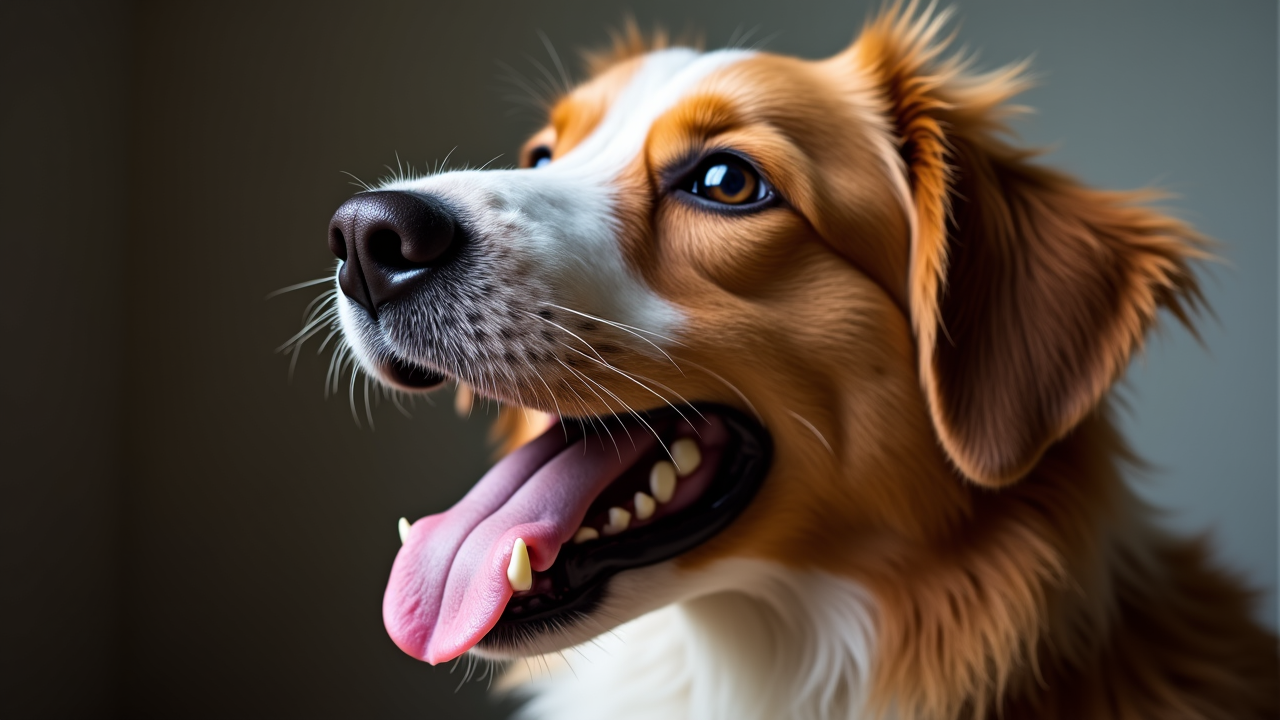
The Veterinary Oral Health Council (vohc.org) operates an evidence-based review of dental products. Products must demonstrate measurable plaque or tartar reduction in controlled studies to receive the VOHC seal.
The seal categories:
- Plaque control — product reduces plaque buildup
- Tartar control — product reduces tartar formation
- Both — most valuable
Without the VOHC seal, marketing claims like “promotes dental health,” “reduces tartar,” or “freshens breath” are unsupported. With the seal, the product has passed independent review.
The full updated list at vohc.org is the authoritative reference. Major categories:
Dental diets (VOHC-approved)
- Hill’s Prescription Diet t/d (large kibble that brushes teeth as dog chews)
- Royal Canin Dental Care
- Purina Pro Plan Veterinary Diets DH
Dental chews (VOHC-approved)
- Greenies (sized appropriately by dog weight)
- OraVet Dental Hygiene Chews (also has antiseptic effect)
- Purina Pro Plan Dental Crunchy Bites
- Virbac C.E.T. VeggieDent
Pastes and gels (VOHC-approved)
- C.E.T. Enzymatic Toothpaste (multiple flavors)
- HealthyMouth Topical Liquid
- Virbac C.E.T. AquaDent (water additive)
Sprays/rinses (VOHC-approved)
- HealthyMouth Spray
- C.E.T. Oral Hygiene Rinse
Daily brushing — the protocol that actually works
Brushing is the single highest-impact intervention. Per AVMA and AAHA: daily is ideal, 3-4x/week is the practical floor.
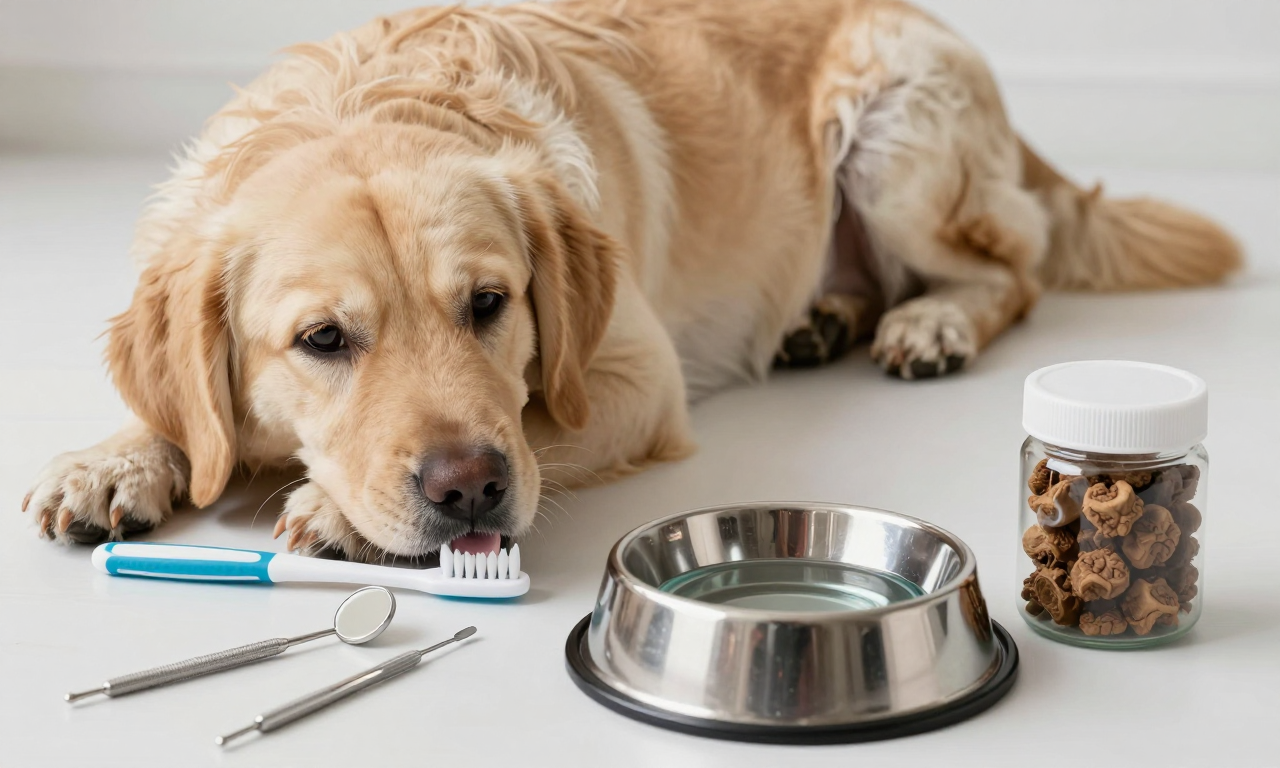
Equipment
- Veterinary enzymatic toothpaste (C.E.T. is the most common; Petrodex, Virbac Vet Solutions, Sentry Petrodex are equivalent). $8-15/tube, lasts 2-3 months.
- Toothbrush: finger brush or small dog brush. Finger brushes are easier for first-time brushers; long-handled brushes reach back molars better.
- Treat reward for cooperation training (small high-value treat post-brushing).
NEVER use human toothpaste. Xylitol (in many human toothpastes) is severely toxic to dogs. Fluoride concentrations in human paste are also too high for dogs who can’t spit.
Step-by-step (first 30 days — acclimation)
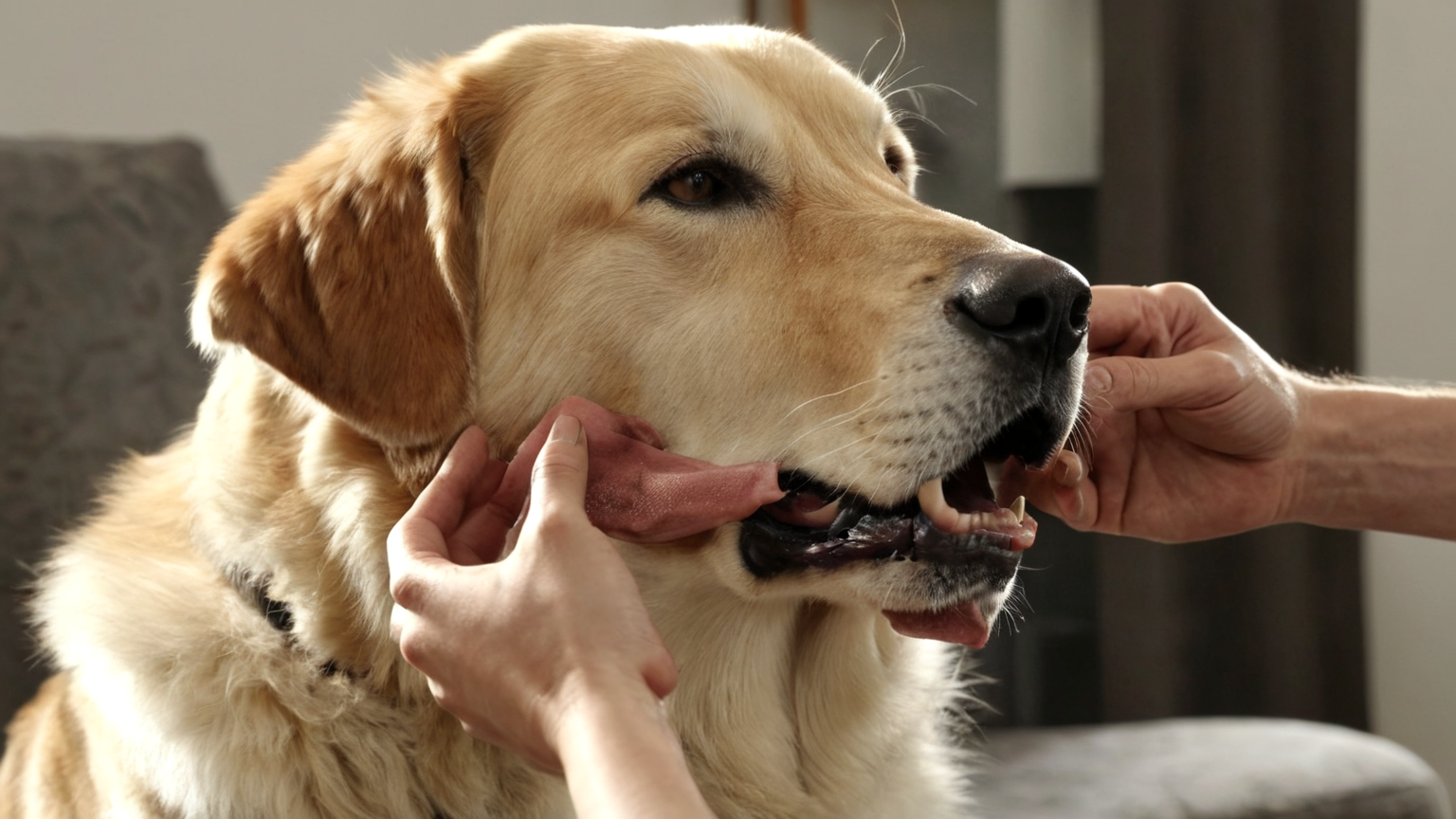
Days 1-3: Touch the dog’s mouth, lift lips, give treat. Build positive association with mouth handling.
Days 4-7: Put toothpaste on finger, let dog lick. Build positive association with paste flavor (poultry, beef, malt — pick what your dog likes).
Days 8-14: Use finger to rub paste on outside surface of canine and incisor teeth (front teeth, easiest access). 10 seconds. Treat.
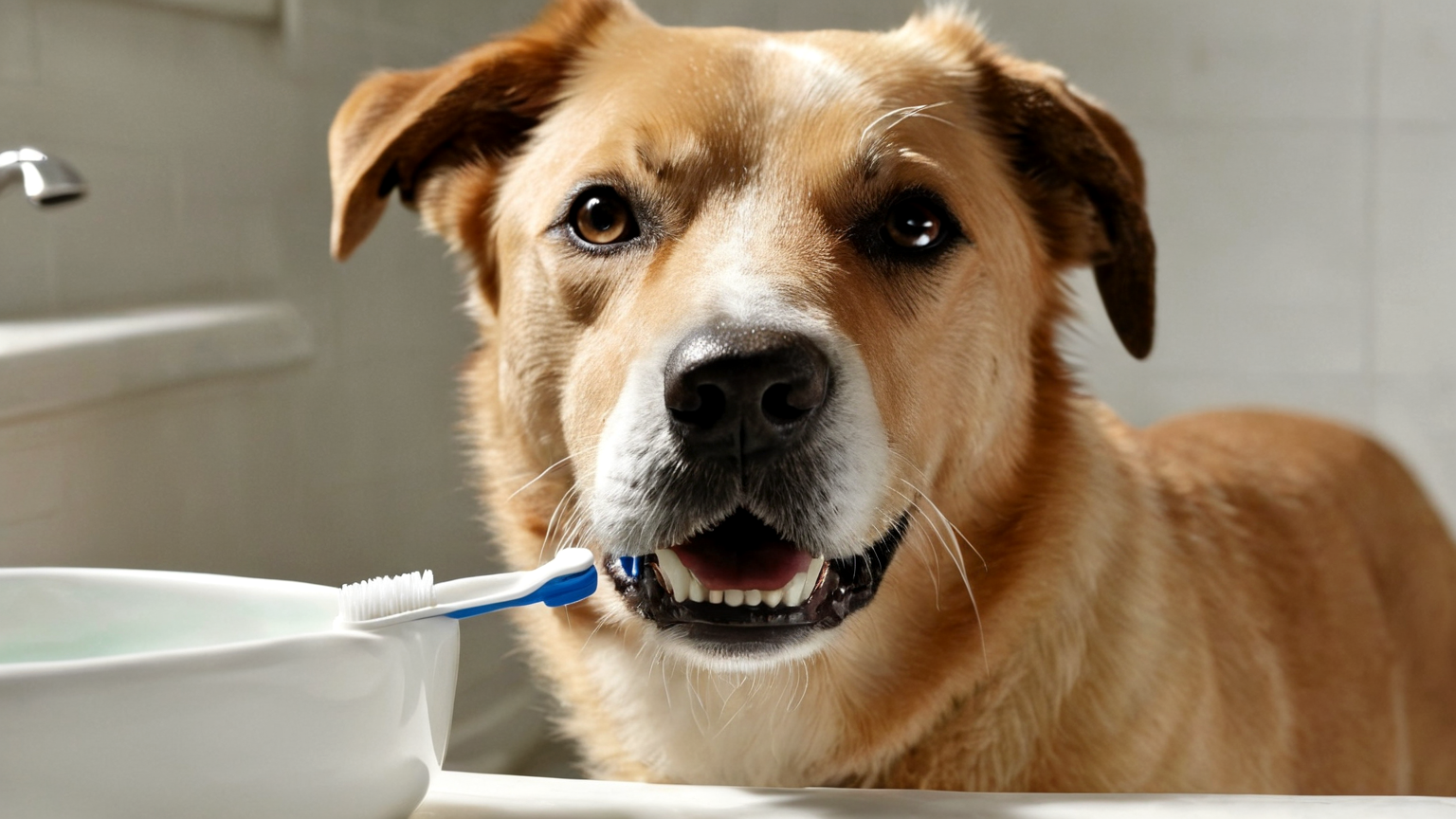
Days 15-21: Add the toothbrush. Brush front teeth. 20 seconds. Treat.
Days 22-30: Extend to molars (back teeth). 30-60 seconds total. Treat.
After day 30, you have a sustainable routine. Most dogs accept brushing within this window with positive reinforcement; particularly food-motivated dogs accept faster.
Daily 60-second protocol
- Lift upper lip on one side
- Brush outside surface of all teeth on that side (15 seconds)
- Switch to the other side (15 seconds)
- Brush front teeth (10 seconds)
- Brief reach to inside surfaces if dog tolerates (often not — outside surfaces are most important)
- Treat reward
You don’t need to reach inside surfaces — the dog’s tongue cleans those naturally. Outside (cheek-side) surfaces are where plaque accumulates and where brushing matters most.
Dental chews — supplement, not replacement
VOHC-approved dental chews reduce plaque measurably (15-30% per AVDC studies). They supplement brushing; they don’t replace it.
Top VOHC-approved chews
- Greenies — most common, sized by dog weight. Soft enough for older dogs, effective enough for active dogs. ~$20-30 for 27-pack of standard size.
- OraVet Dental Hygiene Chews — combines mechanical cleaning with delmopinol (an antiseptic that disrupts plaque biofilm). Slightly more expensive but stronger evidence.
- Virbac C.E.T. VeggieDent — vegetable-based alternative for dogs with sensitivity to wheat or chicken in other chews.
Caloric considerations
Dental chews aren’t free calories. Typical sizing:
- Greenies Petite (15-25 lb dog): 53 kcal each
- Greenies Regular (25-50 lb dog): 100 kcal each
- Greenies Large (50-100 lb dog): 162 kcal each
A daily Greenie for a 35 lb dog is ~100 kcal — about 8-10% of daily calorie budget. Reduce regular food slightly to compensate, especially in dogs prone to weight gain.
What to avoid
- Cooked bones — can splinter, cause GI obstruction or perforation
- Hard nylon chews (“Nylabone” hard varieties) — can fracture teeth
- Hooves and antlers — high tooth fracture risk per AVDC
- Tennis balls as dedicated chew toys — abrasive felt wears tooth enamel
- Ice cubes — can fracture teeth; cold-induced sensitivity in some dogs
Dental diets — the kibble approach
Special dental kibbles are larger and shaped to mechanically brush teeth as the dog chews. The leading VOHC-approved options:
- Hill’s Prescription Diet t/d — requires veterinary prescription. Specifically for dogs with dental disease history.
- Royal Canin Dental Care — over-the-counter dental diet.
- Purina Pro Plan Veterinary Diets DH — prescription dental diet.
For dogs with frequent dental issues despite brushing and chews, transitioning to a dental diet can extend professional cleaning intervals. For most dogs, a regular WSAVA-tier kibble (see dog food AAFCO quality data) plus brushing and chews is sufficient.
Annual veterinary oral exam
Per AAHA and AVDC: annual oral examination by a veterinarian. The vet checks for:
- Tartar accumulation level
- Gum recession or inflammation
- Loose or fractured teeth
- Oral masses or growths
- Tooth resorptive lesions (more common in cats but possible in dogs)
The exam is part of routine annual physical — no extra cost typically. Findings determine whether professional cleaning is recommended.
Professional cleaning under anesthesia
When indicated, professional cleaning involves:
- Anesthesia — required for safety (dogs don’t cooperate with cleaning awake). Pre-anesthesia bloodwork, anesthetic monitoring during procedure.
- Ultrasonic scaling — removes tartar from tooth surfaces above and below the gumline.
- Polishing — smooths tooth surface to slow plaque reaccumulation.
- Examination — full oral exam with the dog under anesthesia (impossible awake).
- Radiographs — full-mouth X-rays in many practices to identify problems below the gumline.
- Extractions — if needed, broken or severely diseased teeth removed during the same anesthesia.
Cost
- Cleaning only: $300-600
- With extractions: $600-1,500+
- With full radiographs: add $150-300
Frequency
- Most healthy adult dogs with home care: every 2-3 years
- Small breeds with predisposition: annually or every 18 months
- Large breeds with strong home care: every 3-5 years
- Senior dogs: depends on overall health and anesthesia tolerance
Anesthesia-free cleaning warnings
Some clinics offer “anesthesia-free dental cleaning” without sedation. Per AVDC and AVMA: this is not effective. The clinic can only access visible tooth surfaces; the gumline and below-gum areas (where most disease is) cannot be reached. Anesthesia-free cleaning provides cosmetic improvement (visible tartar removed) without addressing the underlying periodontal disease. AVDC explicitly recommends against it.
Breeds with elevated dental risk
Per AVDC and breed-specific veterinary literature, these breeds need more aggressive dental care:
- Toy and small breeds (Yorkshire Terrier, Maltese, Pomeranian, Toy Poodle, Chihuahua) — crowded teeth, retained baby teeth, accelerated periodontal disease. Many show disease by age 1-2.
- Brachycephalic breeds (Bulldog, Pug, Boston Terrier) — facial structure causes tooth crowding and malocclusion. More frequent professional cleaning often needed.
- Greyhound — paradoxically high periodontal disease prevalence despite being large breed. Genetics-related. Aggressive home care recommended.
For these breeds, brushing daily (not 3-4x/week) and considering a dental diet from puppy stage often delays onset of significant disease.
Cost analysis — prevention vs treatment
5-year cost comparison for a 50 lb mixed breed:
Aggressive prevention (brushing daily + chews + dental diet)
- Toothpaste: $5/month → $300 over 5 years
- Toothbrush: $20/year → $100
- Dental chews (VOHC): $15/month → $900
- Dental kibble premium: $20/month → $1,200
- Annual oral exam: $0 (included in physical)
- Professional cleaning: 1× over 5 years ($500)
- Total 5-year: $3,000
Standard prevention (brushing 3-4x/week + occasional chews)
- Toothpaste: $5/month → $300
- Toothbrush: $20/year → $100
- Dental chews (occasional): $5/month → $300
- Annual oral exam: $0
- Professional cleaning: 2× over 5 years ($1,000)
- Total 5-year: $1,700
No prevention (no brushing, no chews)
- Annual oral exam: $0
- Professional cleaning: 3× over 5 years ($1,500)
- Extractions during cleanings: $800-1,500
- Possible advanced disease management: $500-2,000
- Total 5-year: $2,800-5,000+
The cheapest path is standard prevention ($1,700). Aggressive prevention costs slightly more but protects against extractions. No prevention is the most expensive over 5 years and worst for the dog.
Bottom line
Three-tier dental care:
- Daily or near-daily brushing with veterinary enzymatic toothpaste — highest impact
- VOHC-approved dental chew 3-7 times per week — supplements brushing
- Annual veterinary oral exam with professional cleaning when indicated
For high-risk breeds or dogs with established disease, add dental diet. For most healthy adult dogs, the three-tier protocol prevents the cascade of plaque → tartar → periodontal disease.
For related decisions, see dog food AAFCO quality data and the dog dental home-care guide.
VOHC-accepted dental products worth keeping in rotation
Per the Veterinary Oral Health Council (VOHC) registry, only specific products show clinically meaningful tartar and plaque reduction in controlled trials. These three carry current VOHC seals and are widely available:
Greenies Original Dental Treats (Regular, 36 oz)
Price · $30-40 — VOHC-accepted for tartar
+ Pros
- · VOHC seal for tartar control with consistent daily use
- · Wedge shape designed to scrape teeth at the gum line
- · Sized variants for tiny, regular, and large dogs
− Cons
- · High calorie — count as ~75 kcal each, adjust meal portions
- · Some dogs with grain sensitivities react to the wheat base
Paid affiliate link. Price, availability, and ratings can change; verify details on the retailer page before buying.
Whimzees Daily Dental Chews (Variety Pack)
Price · $25-35 — grain-free VOHC alternative
+ Pros
- · VOHC-accepted, grain-free, no artificial colors or flavors
- · Five shapes provide texture variety; long chew time
- · Lower calorie per chew than Greenies (~50-65 kcal)
− Cons
- · Pricier per chew than Greenies
- · Some dogs swallow large pieces — supervise the first few sessions
Paid affiliate link. Price, availability, and ratings can change; verify details on the retailer page before buying.
Oravet Dental Hygiene Chews (Medium, 30 ct)
Price · $30-40 — for dogs with heavy biofilm
+ Pros
- · Contains delmopinol — clinically shown to reduce plaque biofilm
- · VOHC seal for both tartar AND plaque (rare combo)
- · Veterinarian-distributed brand, strong evidence base
− Cons
- · Higher cost per chew vs Greenies / Whimzees
- · Wheat and soy base — not for sensitive dogs
Paid affiliate link. Price, availability, and ratings can change; verify details on the retailer page before buying.
The dental data is unambiguous: daily VOHC-accepted chews + once-or-twice-weekly brushing is the only at-home protocol that reduces vet dental cleanings frequency by a measurable margin. Pick whichever product your dog accepts and use consistently.
Additional visual reference
Visual walk-through