Dog Food Quality Decoded — AAFCO Standards, WSAVA Brands, and What the Label Really Means
AAFCO nutrient profiles, WSAVA-recommended brands, and how to read a dog food label past the marketing. Veterinary nutritionist consensus and 2024 data.

The dog food market is loud with marketing — “natural,” “human-grade,” “ancestral diet,” “grain-free.” The veterinary nutrition consensus, anchored by AAFCO regulations, WSAVA guidelines, and ACVN expert recommendations, is much narrower. This article walks through what an AAFCO statement actually verifies, the WSAVA criteria for brand quality, and how to read a dog food label past the marketing claims.
The TL;DR from veterinary nutritionists: any food meeting AAFCO for the appropriate life stage from a WSAVA-tier brand (Hill’s, Royal Canin, Purina Pro Plan, Iams, Eukanuba) is appropriate for most healthy adult dogs. The marketing premium for “boutique” brands rarely correlates with measurable nutritional improvement and sometimes correlates with documented harm.
For complementary pet care content, see the cat water intake guide.
What AAFCO actually does
The Association of American Feed Control Officials sets minimum nutrient profiles for pet food. Compliance is verified two ways:
- Formulation method — manufacturer calculates nutrient content from ingredient analysis, demonstrates it meets AAFCO minimums on paper.
- Feeding trial method — manufacturer conducts AAFCO-protocol feeding trial (typically 26 weeks) with live dogs to verify health outcomes.
Feeding-trial-verified foods are the higher standard. The AAFCO statement on the bag tells you which method was used:
- “Animal feeding tests using AAFCO procedures substantiate that [Brand] provides complete and balanced nutrition” → feeding trial verified
- “[Brand] is formulated to meet the nutritional levels established by AAFCO Dog Food Nutrient Profiles” → formulation verified
For most foods, formulation is fine; for life-critical applications (puppy growth, large-breed nutrition, senior with chronic conditions), feeding-trial-verified is meaningfully better.

WSAVA — the real quality screen
The World Small Animal Veterinary Association’s Global Nutrition Guidelines provide eight questions to evaluate any pet food brand. Veterinary nutritionists use these as the practical screen for “is this a quality brand.”
The eight WSAVA questions:
- Do you employ a full-time veterinary nutritionist with DACVN (Diplomate of the American College of Veterinary Nutrition) or ECVCN credentials?
- What is your quality control process for raw ingredients and finished product?
- Do you conduct AAFCO feeding trials for your foods?
- Do you conduct digestibility studies?
- Where are your foods manufactured — own facility or contracted?
- Where are ingredients sourced — country of origin documented?
- Will you provide complete nutrient analyses by lot, on request?
- Have you published peer-reviewed nutritional research?
Brands that answer “yes” to all 8: Hill’s Pet Nutrition, Royal Canin, Purina Pro Plan, Eukanuba, Iams. These are the WSAVA-tier brands.
Many boutique brands (“natural,” “ancestral,” “premium”) fail 4-6 of these criteria. The marketing focuses on ingredient stories rather than research and verification. The cost per calorie is often higher despite lower verification standards.
The “big 5” — what they actually do
The five WSAVA-tier brands share specific characteristics:
Hill’s Pet Nutrition (owned by Colgate-Palmolive)
- 220+ veterinarians and food scientists on staff
- 8,000+ peer-reviewed research papers
- Owns clinical research facilities
- Strong Prescription Diet line for medical conditions
Royal Canin (owned by Mars Petcare)
- 600+ veterinarians and nutritionists globally
- Breed-specific formulations (German Shepherd, Yorkie, etc.) backed by research
- Veterinary diet line for chronic conditions
- Strongest in life-stage and breed-specific science
Purina Pro Plan (owned by Nestle)
- 500+ scientists, 11 research and development facilities
- Long-term feeding studies (Labrador retriever lifetime study)
- Sport/performance line backed by research
- Generally the most affordable WSAVA-tier option
Eukanuba and Iams (owned by Mars/Spectrum Brands)
- Long-term peer-reviewed research history
- Strong in performance and large-breed nutrition
- Consolidated under different ownership but maintain research standards
What “boutique” gets you (mostly): marketing
Per ACVN and Tufts Veterinary Nutrition analyses, boutique brands typically:
- Pay for ingredient stories — exotic proteins, “ancestral” formulations, marketing language
- Lack feeding trials — most are formulation-only AAFCO compliance
- Don’t employ veterinary nutritionists — formulators are often food scientists, not DACVN-credentialed
- Source from small co-pack manufacturers — fewer quality-control resources
- Cost more per calorie — premium positioning despite less verification
There are ethical, well-run boutique brands. But identifying them requires WSAVA-criteria interrogation, not marketing trust.

DCM and grain-free — what the FDA found
In 2018, FDA opened an investigation into elevated dilated cardiomyopathy (DCM) cases in dogs eating certain “BEG” (boutique, exotic, grain-free) diets. By 2024, FDA reported:
- 1,100+ DCM cases reported during the investigation period
- Over 90% of cases were on grain-free diets
- The pattern was strongest with peas, lentils, and legumes as primary ingredients
- A subset of cases reversed when diet was changed to grain-inclusive WSAVA-tier brands
The mechanism remains under investigation. As of 2024, FDA hasn’t established definitive causation but recommends caution with grain-free formulations, especially boutique brands without strong veterinary nutrition involvement.
For dogs without diagnosed grain allergy (under 1% per veterinary dermatology surveys), grain-inclusive WSAVA-tier brands are the safer evidence-based choice.
Reading a dog food label
The five things that actually matter, in order:
1. AAFCO statement
- Confirms the food is “complete and balanced” for a life stage
- Verification method (feeding trial > formulation)
- Life stage (puppy, adult, all life stages, senior)
2. Guaranteed Analysis
- Crude protein — minimum (typically 18-30%)
- Crude fat — minimum (typically 8-20%)
- Crude fiber — maximum
- Moisture — maximum (kibble ~10%, wet ~75%)
Compare apples to apples by adjusting for moisture (dry matter basis). A wet food with 8% protein at 78% moisture has 36% protein on dry matter basis — comparable to a 32% protein kibble.
3. Ingredient list
- Sorted by weight pre-cooking
- Meat protein as first ingredient is preferred
- “Meal” (chicken meal, fish meal) is dehydrated meat — actually higher protein concentration than fresh meat after processing
- Watch for ingredient splitting (corn → corn meal, corn gluten meal, ground corn)
4. Calorie content
- Listed as kcal/cup or kcal/kg
- Critical for managing weight and calculating actual cost (cost per calorie matters more than cost per pound)
5. Manufacturer contact
- WSAVA-tier brands respond to nutrient analysis requests within days
- If contacting the brand is hard, that’s a signal
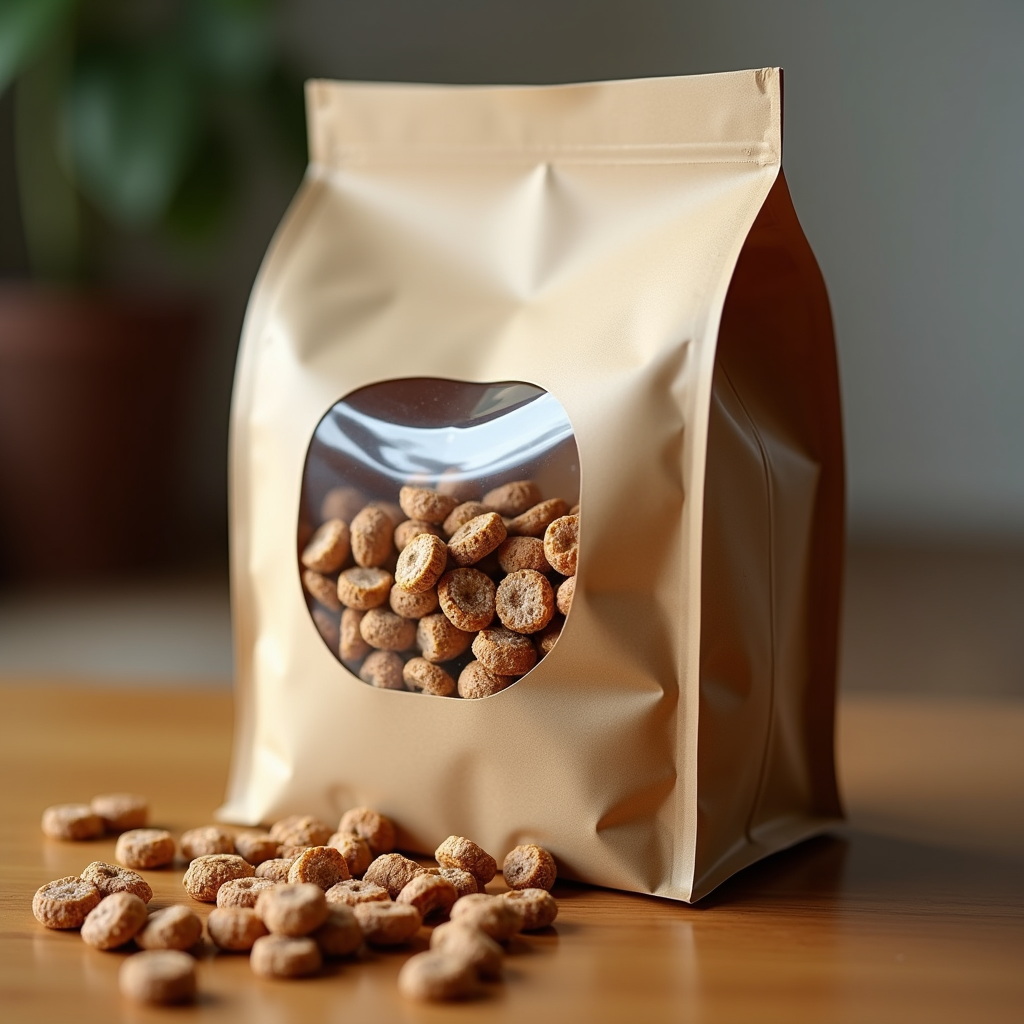
Kibble vs wet vs raw
Kibble
- Most economical per calorie
- Convenient storage and feeding
- Lower moisture content (consider water bowl access)
- WSAVA-tier brands: all available
Wet (canned)
- Higher moisture (helpful for dogs with kidney issues, urinary issues, or low water intake)
- More expensive per calorie
- Stronger smell may improve palatability for picky eaters
- Open cans store 3-5 days refrigerated
- WSAVA-tier brands: all available
Raw (commercial or homemade)
- Documented bacterial contamination risk (Salmonella, E. coli, Listeria) per CDC and FDA
- Not recommended for households with immunocompromised members, young children, or elderly
- Nutritional balance often inadequate without veterinary nutritionist formulation
- More expensive
- AVMA position: caution and acknowledge documented risks
If raw is preferred, work with a board-certified veterinary nutritionist (ACVN diplomate) for proper formulation and discuss bacterial-contamination mitigation.
Senior, puppy, and breed-specific
Puppies
- AAFCO “growth” statement required (or “all life stages”)
- Higher protein, fat, calcium content for development
- Large-breed puppies need lower calcium (controlled growth) — Royal Canin and Purina Pro Plan have specific large-breed puppy formulas backed by research
- Feed puppy food until 12 months (small breeds) or 18-24 months (large breeds)
Adult maintenance
- AAFCO “adult maintenance” or “all life stages”
- Most diverse selection across all brands
Senior (7+ years)
- AAFCO doesn’t require senior-specific formulations
- “Senior” foods often have lower calorie density (helpful for less active dogs)
- Conditions develop with age (kidney, joint, weight) — veterinary diet may be appropriate; consult vet
Breed-specific
- Royal Canin has the most extensive breed-specific line backed by research
- Genuinely useful for some breeds with specific needs (large breed joint support, small breed dental challenges)
- For most breeds, life-stage formulation is sufficient
Cost per calorie reality
Comparing WSAVA-tier kibble (50 lb large breed dog, ~1,400 kcal/day):
| Brand | $/lb | kcal/lb | $/day | $/year |
|---|---|---|---|---|
| Purina Pro Plan Adult | $2.50 | 1,800 | $1.94 | $709 |
| Iams Adult | $2.20 | 1,750 | $1.76 | $642 |
| Hill’s Science Diet Adult | $3.00 | 1,750 | $2.40 | $876 |
| Royal Canin Adult | $3.50 | 1,720 | $2.85 | $1,040 |
| Boutique 1 (typical) | $4.50 | 1,650 | $3.81 | $1,391 |
| Boutique 2 (premium) | $5.50 | 1,600 | $4.81 | $1,756 |
The boutique premium often runs $700-1,000/year over Purina Pro Plan or Iams — for a brand that may not pass WSAVA criteria.
Bottom line
For most healthy adult dogs:
- Pick a WSAVA-tier brand (Hill’s, Royal Canin, Purina Pro Plan, Iams, Eukanuba)
- Match life stage (puppy/adult/senior) per AAFCO statement
- Choose feeding trial verified when available, especially for puppies and seniors
- Avoid grain-free without specific veterinary indication — FDA DCM concern
- Compare cost per calorie, not cost per pound
For specific medical conditions (kidney disease, urinary issues, allergies, weight management), use prescription diets from the same brands under veterinary guidance.
For complementary pet content, see cat water intake.
AAFCO-compliant dog food picks across price tiers
The AAFCO statement matters less than feeding-trial backing and ingredient quality. These three brands all carry “AAFCO complete and balanced” labels AND have feeding-trial substantiation, which separates them from formulation-only competitors:
Hill's Science Diet Adult Dry Dog Food (Chicken & Barley)
Price · $60-90 for 30 lb bag — feeding-trial substantiated
+ Pros
- · Feeding-trial backed AAFCO claim (gold standard vs formulation-only)
- · Research-driven nutrient profile, consistent batch quality
- · Veterinarian-recommended for adult dogs without special needs
− Cons
- · Higher per-pound cost than supermarket brands
- · Chicken-first ingredient — rotate or skip for chicken-sensitive dogs
Paid affiliate link. Price, availability, and ratings can change; verify details on the retailer page before buying.
Purina Pro Plan Sport All Life Stages 30/20 (37.5 lb)
Price · $70-90 — active and working dog formulation
+ Pros
- · 30% protein / 20% fat for working and high-activity dogs
- · Feeding-trial substantiated, WSAVA-compliant manufacturer
- · Stable formulation, widely stocked, strong batch consistency
− Cons
- · Calorie-dense — over-feeding low-activity dogs leads to weight gain
- · Chicken byproduct meal early in ingredient list (acceptable but divides opinion)
Paid affiliate link. Price, availability, and ratings can change; verify details on the retailer page before buying.
Royal Canin Size Health Nutrition (Adult Medium)
Price · $70-110 — breed-size-specific formulation
+ Pros
- · Size-and-life-stage optimized formula (medium / large variants)
- · Feeding-trial backed, owned by Mars Petcare (large QA infrastructure)
- · Kibble size and shape engineered to encourage chewing
− Cons
- · Premium pricing — among the highest in mainstream brands
- · Some specialty SKUs use chicken by-product meal as primary protein
Paid affiliate link. Price, availability, and ratings can change; verify details on the retailer page before buying.
For most adult dogs in normal body condition, any of these three is a defensible choice over boutique brands lacking feeding trials. Pick based on price, activity level, and which protein source your dog tolerates best — not marketing claims about “grain-free” or “ancestral diet.”