Senior Dog Diet Transition Checklist: Change Food Without Upsetting the Gut
A vet-informed senior dog diet transition plan covering baseline logs, calorie math, stool changes, stop rules, and when to involve your veterinarian.
Changing a senior dog’s food is not a weekend experiment. Older dogs may be managing dental pain, osteoarthritis, kidney or heart disease, pancreatitis history, cognitive change, medication schedules, or a slower appetite. A good transition plan protects the dog from avoidable stomach upset while giving the veterinary team useful evidence if the new diet does not fit. This guide is not a brand ranking and it does not replace an exam. It is a practical, vet-informed process for deciding whether a diet change is justified, how to transition gradually, what to track at home, and when to stop and call the clinic.
Decide whether the change has a medical reason
Start with the reason for changing food. A senior dog who is stable, eating well, maintaining lean muscle, and producing normal stool may not need a dramatic change just because the front of a bag says senior. A diet switch is more defensible when the current food no longer matches the dog: unexplained weight change, low appetite, dental difficulty, new laboratory findings, recurring soft stool, pancreatitis risk, or a veterinarian’s recommendation for a therapeutic diet. Write the reason down before you shop. It keeps the decision from drifting toward marketing claims.
Senior nutrition is individual because age is not a diagnosis. Two twelve-year-old dogs can have opposite needs: one may need fewer calories and joint-friendly weight control; another may need more energy density because muscle is disappearing. Ask the clinic for a current weight, body condition score, muscle condition impression, and any disease-specific limits such as sodium, phosphorus, fat, protein quality, or fiber. Those numbers matter more than a generic life-stage label.
If the dog has kidney disease, heart disease, diabetes, pancreatitis history, food allergy, or a prescription diet, do not freelance a new formula. Therapeutic diets are designed around clinical tradeoffs, and mixing them casually with toppers can defeat the purpose. For healthy older dogs, compare the nutritional adequacy statement, calorie density, digestibility signs, company quality control, and whether the manufacturer can answer WSAVA-style questions about formulation and feeding trials.
Build a baseline before opening the new bag
For seven days, track the current diet before changing anything. Record meals offered, meals eaten, treats, vomiting, stool quality, water behavior, energy, mobility, and medications. Weigh the dog if you can do it safely on the same scale. Photograph body shape from the side and above if weight has been creeping up or down. This baseline prevents a common error: blaming the new food for a problem that started earlier, or missing a slow decline because the dog still eats treats.
Stool records should be simple. Note whether stool is formed, soft, watery, mucus-covered, unusually dark, or accompanied by straining. Appetite records should separate interest from intake: eager and finished, sniffed and delayed, ate half, ate only with topper, or refused. For older dogs, also track chewing behavior. A dog that drops kibble, chews on one side, or avoids hard pieces may need dental evaluation rather than a richer diet.
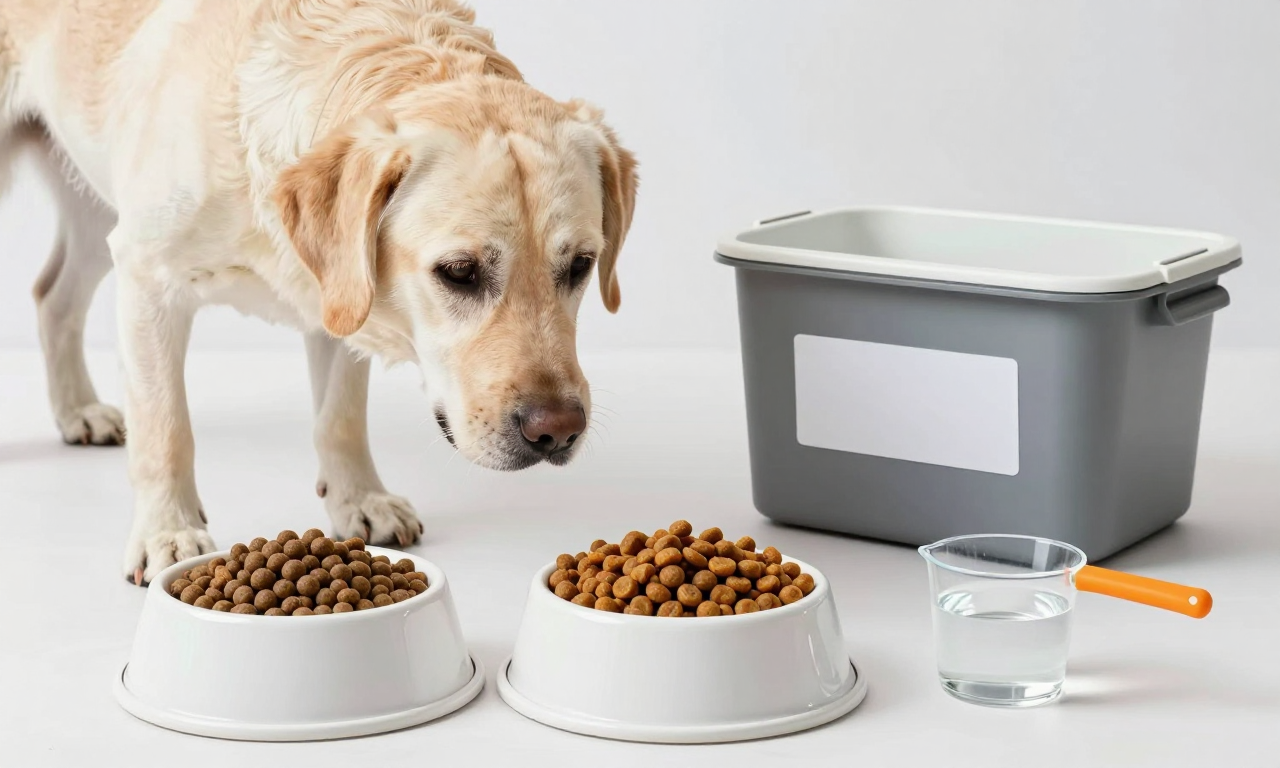
Measure the old food with the same cup or, ideally, a kitchen scale. Many transition failures are actually portion errors. A new food can have a very different calorie density, so one cup of old food is not nutritionally identical to one cup of new food. Use the label calories and the veterinarian’s target weight plan to set the amount, then adjust based on body condition rather than the dog’s enthusiasm.
Use a slow transition and stop rules
A reasonable default is a ten-to-fourteen day transition: mostly old food at first, then a gradual increase in the new food only if stool and appetite stay normal. Sensitive dogs may need longer. Dogs with a history of pancreatitis, inflammatory bowel disease, or severe allergies need a veterinary plan rather than a casual blend. During the transition, do not add multiple new treats, chews, supplements, and toppers at the same time. If five variables change, you will not know what caused the diarrhea.
Stop rules should be decided in advance. Call the veterinarian if the dog refuses more than one meal, vomits repeatedly, has watery diarrhea, shows blood or black stool, becomes lethargic, seems painful, drinks or urinates dramatically more, or loses noticeable weight. Mild stool softness may justify pausing at the current ratio for a few days; significant illness is not a normal detox period. Senior dogs have less reserve, and waiting too long can turn a food experiment into dehydration or a pancreatitis flare.
Keep medications steady unless the veterinarian changes them. Some drugs and supplements interact with appetite, stool, or hydration. Nonsteroidal anti-inflammatory drugs, steroids, heart medications, seizure medications, antibiotics, and thyroid treatment can all complicate interpretation. Bring the diet log and the medication list to the clinic instead of relying on memory.
Evaluate protein, fat, fiber, and texture like a clinician
Protein is not automatically bad for senior dogs. Many older dogs need enough high-quality protein to protect lean mass, but some kidney or liver conditions require a tailored approach. Fat can improve palatability and calorie density, but high-fat foods may be risky for dogs prone to pancreatitis. Fiber can help stool quality and satiety, but too much can reduce calorie intake or worsen gas. The right balance depends on the dog in front of you, not a single internet rule.
Texture is part of nutrition. Dogs with dental disease, missing teeth, jaw pain, or cognitive change may eat better with softened kibble, wet food, or a mixed texture. However, adding water to food means the bowl should be picked up promptly and washed, especially in warm rooms. If wet food is introduced, count the calories and monitor stool; do not simply add it on top of the full kibble ration unless weight gain is intended.
Supplements deserve skepticism. Omega-3 products, joint supplements, probiotics, and fiber powders may have a place, but they should solve a defined problem and come from quality-controlled manufacturers. Avoid stacking products with overlapping ingredients. If the main diet is complete and balanced, supplements are not needed to make it complete; they are targeted tools that should be discussed when the dog has a specific need.
Make the follow-up decision after four weeks
After the transition, run a four-week evaluation. Compare weight, body condition, stool, appetite, skin, coat, energy, and mobility to the baseline. A successful switch is boring: the dog eats predictably, stool is formed, weight follows the plan, and no new symptoms appear. If the only improvement is that the dog is excited by novelty, wait before declaring victory. Palatability is useful, but it is not the same as a better long-term diet.
Bring objective notes to the next veterinary visit. Ask whether the current calorie target is still right, whether bloodwork or urine testing is due, and whether any disease-specific diet is becoming appropriate. If the dog is losing muscle, gaining fat, or needing more toppers every week, the plan needs adjustment. Senior diet management is a loop: measure, change one variable, observe, and revise with the clinic.
The best food transition is not the one with the trendiest ingredient list. It is the one that supports the dog’s medical status, keeps digestion stable, fits the household budget, and gives caregivers a repeatable routine. When in doubt, slow down, collect better data, and involve the veterinarian before making the next change.
A practical two-week checklist
Day zero is for preparation. Confirm the exact product name, formula, calorie density, and feeding amount before the first mixed meal. Take a photo of the current bag and the new bag, including the nutritional adequacy statement and lot number. Put the measuring cup or kitchen scale in the same place each day so different family members do not estimate portions differently. If the dog takes medicine with food, decide whether medicine will stay with the old portion, the new portion, or a separate small bite during the transition.
Days one through three should feel uneventful. Use a small amount of the new food with the familiar food and watch stool, appetite, and comfort. Do not interpret begging as proof that the dog needs more calories; new smell and novelty can increase enthusiasm. If stool softens mildly, hold the same ratio instead of advancing. If the dog refuses the mixture but eats the old food alone, ask whether texture, smell, or bowl location changed. Older dogs can be sensitive to details that seem trivial to humans.
Days four through ten are when many households move too fast. Increase only one variable at a time. Keep treats boring and consistent. Avoid adding broth, cheese, fatty leftovers, or multiple supplements to force acceptance unless the veterinarian recommends a specific strategy. A diet that requires heavy bribery from the first week may not be the right long-term option, especially for a dog that must maintain weight control or a disease-specific nutrient profile.
Days eleven through fourteen are for confirmation rather than celebration. The new diet should be close to full strength, but the log should continue. Check weight trend, thirst, stool, energy, and willingness to eat the measured portion. If the dog is doing well, keep the same plan for several weeks before judging coat, mobility, or body composition. If the dog is not doing well, bring the log to the clinic. A clear two-week record is more useful than a vague report that the food did not agree with him.
Visual walk-through