Senior Dog Thunderstorm Anxiety Safe Room Plan 2026
A practical, veterinarian-aware plan for helping senior dogs through thunderstorm anxiety with a safe room, sound buffering, routine, medication questions, and after-storm recovery.

Thunderstorms can be harder on senior dogs because hearing changes, arthritis pain, cognitive changes, medication schedules, and slippery floors can all interact with fear. This guide was checked on 2026-06-17 against AVMA, AAHA, ASPCA, Merck Veterinary Manual, VCA, AKC, veterinary behavior, and veterinary-practice resources. It is not veterinary medical advice: sudden new panic, collapse, breathing trouble, injury, destructive escape attempts, or sedative questions belong with a licensed veterinarian who knows the dog.
Storm-night decision table
| Situation | Safer choice | Mistake to avoid |
|---|---|---|
| Forecast shows storms tonight | Prepare safe room before fear escalates | Waiting until escape behavior starts |
| Dog is older or painful | Ask vet about pain, cognition, and medication options | Assuming fear is only stubbornness |
| Dog hides under furniture | Offer safe access and reduce noise/light | Dragging the dog into exposure |
| Storm ends | Let the dog decompress and record what happened | Punishing panting, pacing, or hiding |
1. Start before the first thunder cue
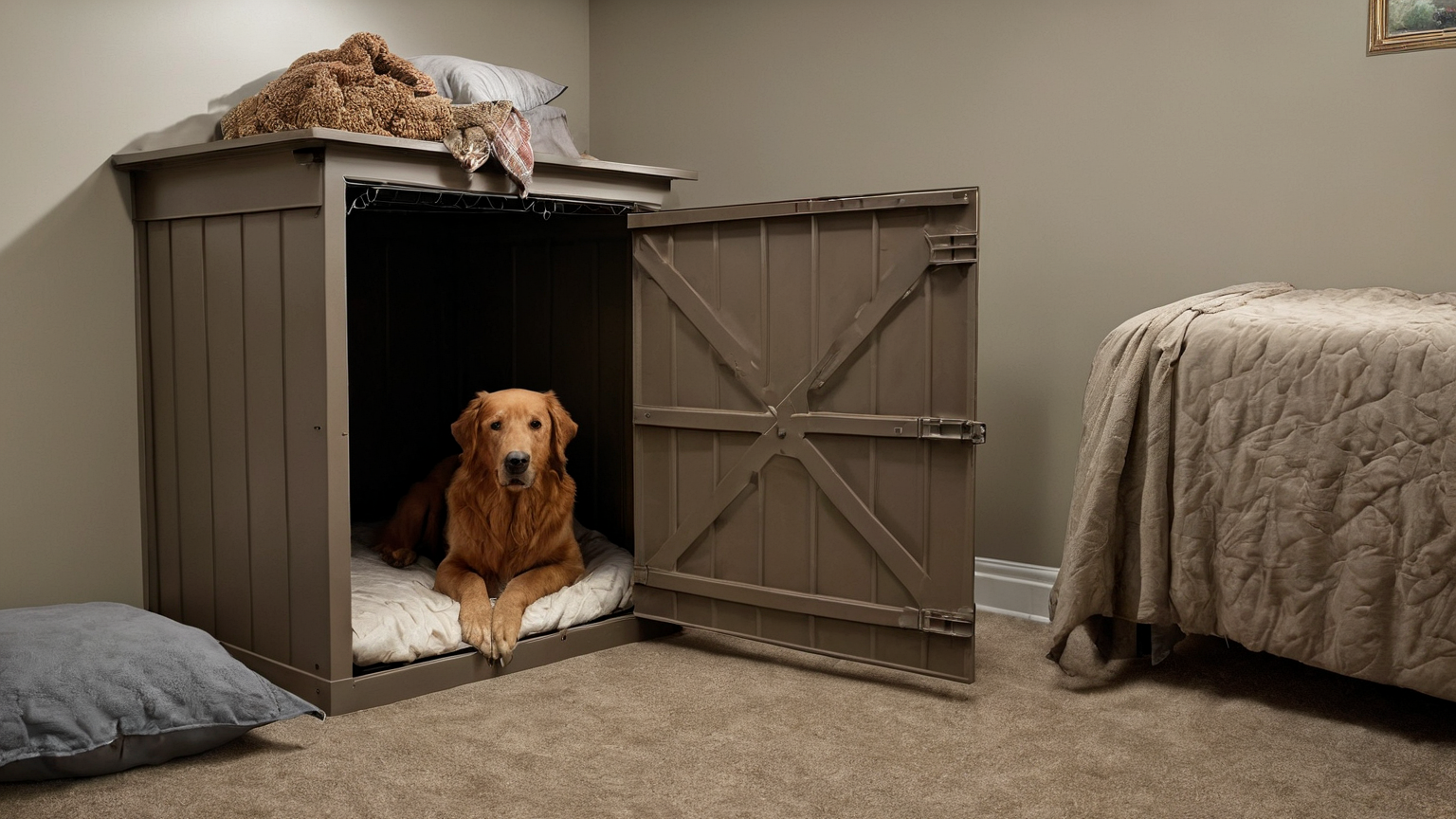
Open the safe room when the forecast turns plausible, not after the dog is already pacing. Put the bed, water, traction mat, favorite low-arousal toy, and an open crate or hiding option in the same quiet area. A senior dog with arthritis or vision changes should not have to cross slick floors or stairs to find safety.

2. Use comfort without forcing exposure
Sit nearby if your dog seeks contact, but do not drag the dog out, block exits, or punish panting and hiding. Noise phobias are fear responses, not disobedience. Keep curtains closed, add steady background sound, and make the room boring and predictable.

3. Separate training from storm-night management
Counterconditioning and desensitization belong in calm practice sessions, often with veterinary or behavior guidance. During an active storm, the goal is harm reduction: prevent escape, reduce injury risk, and help the dog recover. Do not run loud-noise practice while the real event is already frightening.

4. Escalate medication questions early
If storms trigger self-injury, destructive escape, collapse, severe panting, or hours of distress, book a veterinary visit before the next storm season. Ask about pain, cognition, hearing, heart or respiratory disease, and whether situational medication is appropriate. Do not borrow another pet’s medication or guess a dose.

5. Write a post-storm note
Record the forecast, warning signs, room setup, what helped, and how long recovery took. That note lets your veterinarian distinguish ordinary startle from worsening anxiety, pain, or cognitive change and keeps the next plan practical rather than emotional.
Seven-point implementation checklist
- Check the forecast early enough to prepare the safe room before fear escalates.
- Keep water, traction, bedding, and an open hiding option in one quiet area.
- Do not force exposure, punish fear, or block the dog from a safe hiding spot.
- Ask the veterinarian about pain, cognition, heart/respiratory issues, and medication before storm season when distress is severe.
- Write a short post-storm note with triggers, setup, recovery time, and any injury or escape behavior.
- Keep affiliate pressure out of veterinary safety decisions.
- Revisit the checklist when the dog’s age, mobility, hearing, medication, or storm pattern changes.
Source notes and limitations
The linked veterinary and animal-care sources set conservative comfort, safety, and escalation boundaries. They do not replace a veterinarian who knows the dog’s medical history, medication risks, pain level, or behavior history.
FAQ
Why does this article avoid text-heavy images?
The visuals are GTI13 raster illustrations. Exact rules, warnings, and tables stay in body text where readers and assistive technology can use them.
Is this current for June 2026?
The source list was checked during the 2026-06-17 publishing workflow. For medication, severe anxiety, injury risk, pain, or worsening behavior, open current veterinary resources and call the dog’s clinic before acting.
Does this page recommend products?
No. This unit preserves AdSense readiness by prioritizing practical guidance, source transparency, internal navigation, and clear limits rather than affiliate filler.