Cat Hydration and Urinary Risk: A Practical Home Plan
A veterinarian-source backed plan for helping cats drink more, using food moisture wisely, watching litter-box clues, and knowing urgent urinary warning signs.
Updated May 26, 2026. This guide turns current public veterinary and pet-food resources into a home routine. It is educational and cannot diagnose urinary disease. If your cat is straining, producing no urine, crying, vomiting, hiding, or acting weak, call an emergency veterinarian instead of trying a hydration experiment.
Cats are descended from animals that conserve water well, but a modern indoor cat can still run into trouble when intake is low, meals are dry, the water bowl is unappealing, or a urinary condition develops quietly. The goal is not to force water. The goal is to make the healthy choice easy, measure the few clues you can see at home, and know which signs are too urgent for home care.
The four-part hydration system
| Layer | What you control | Why it helps | What to watch |
|---|---|---|---|
| Water access | More bowls, clean fountain, quiet locations | Reduces friction for drinking | Bowl level, fountain cleanliness |
| Food moisture | Wet food or mixed feeding when appropriate | Adds water during normal meals | Appetite, stool, weight |
| Litter monitoring | Track clump size, frequency, straining | Catches pattern changes early | Repeated trips, blood, pain |
| Vet timing | Know emergency signs | Prevents delay during obstruction | No urine, collapse, vomiting |
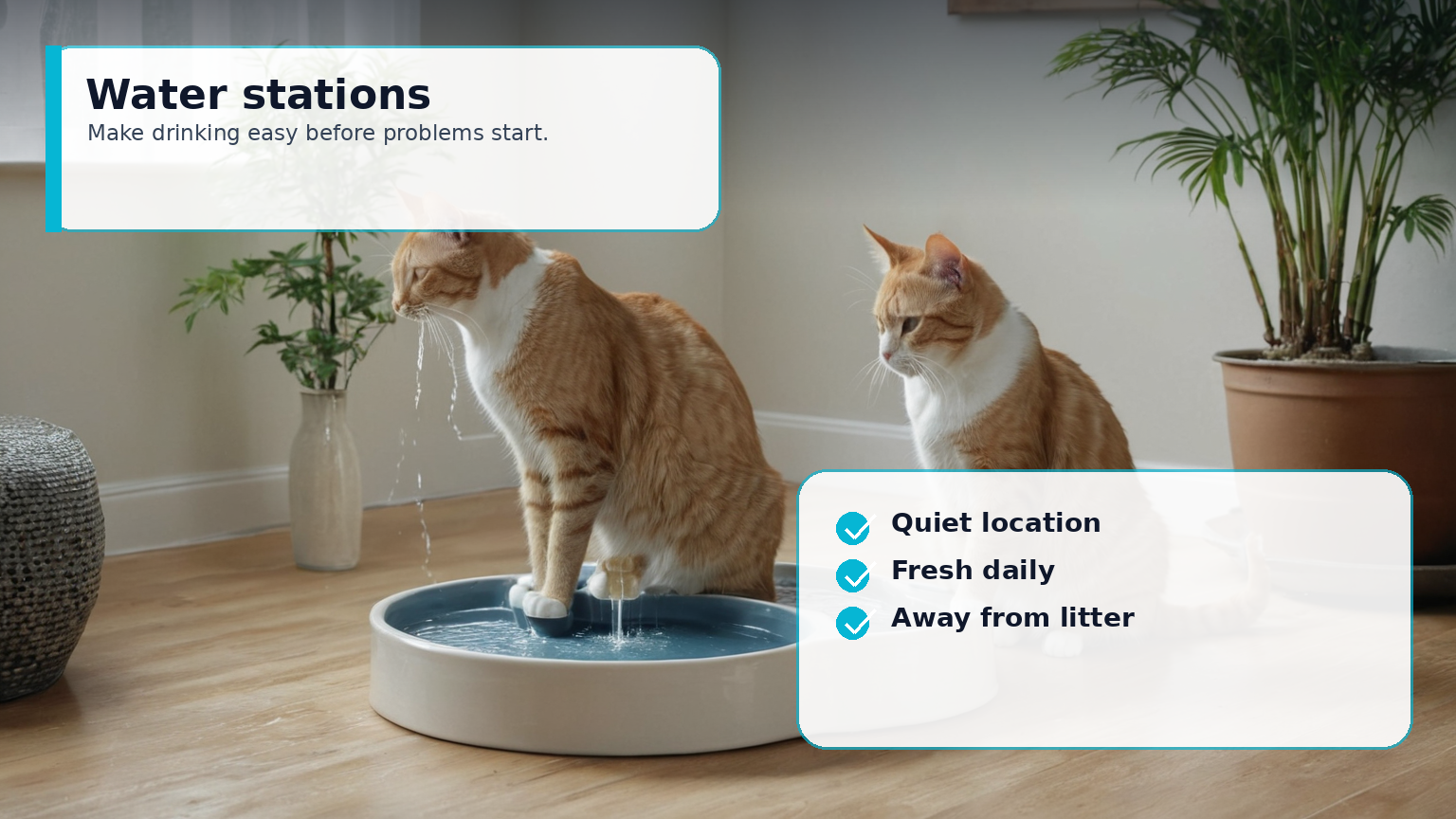
Step 1: make water easy, boring, and fresh
Place water where the cat already travels: near a favorite window, along the route to food, and in a quiet room away from the litter box. Some cats prefer ceramic or stainless bowls. Others prefer fountains. The useful test is not what looks best online; it is what your cat actually uses for two weeks.
Clean bowls daily and fountains according to the filter schedule. Biofilm makes water less appealing and can turn a good idea into a neglected appliance. If you have multiple cats, add enough stations that a shy cat does not need to pass a dominant cat to drink.
Step 2: use food moisture thoughtfully
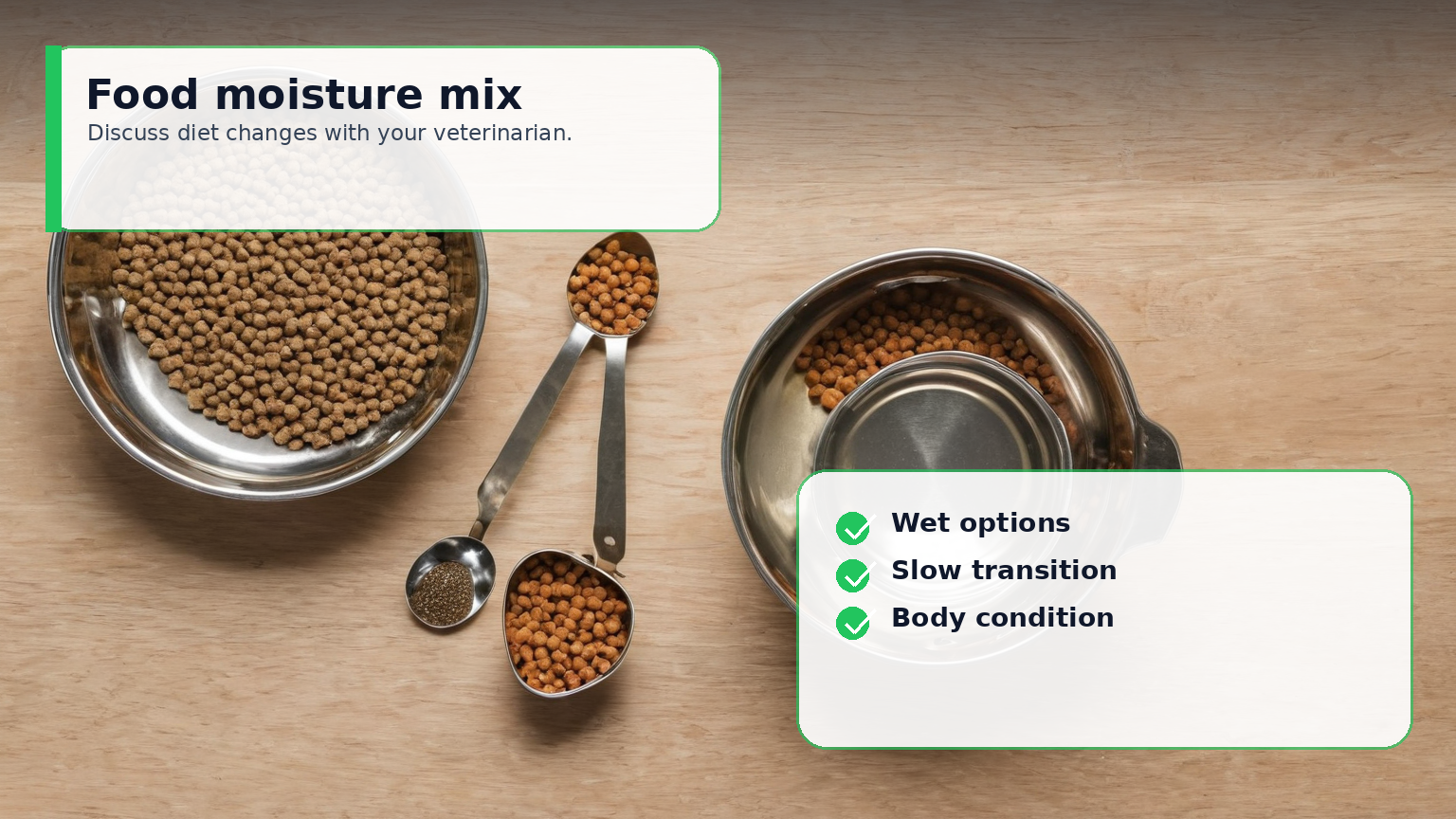
Wet food can increase water intake because moisture arrives with the meal. Dry food can still be appropriate for many cats, especially when cost, dental routines, food puzzles, or prescription plans matter. The decision should consider body condition, appetite, stool, medical history, and your veterinarian’s advice.
A safe transition is usually gradual: replace a small portion of the old food, keep meal times predictable, and stop if vomiting, diarrhea, or refusal appears. Do not use raw diets as a hydration shortcut; FDA safety materials warn that raw pet foods can carry pathogens that may affect pets and people.
Step 3: turn the litter box into a simple dashboard
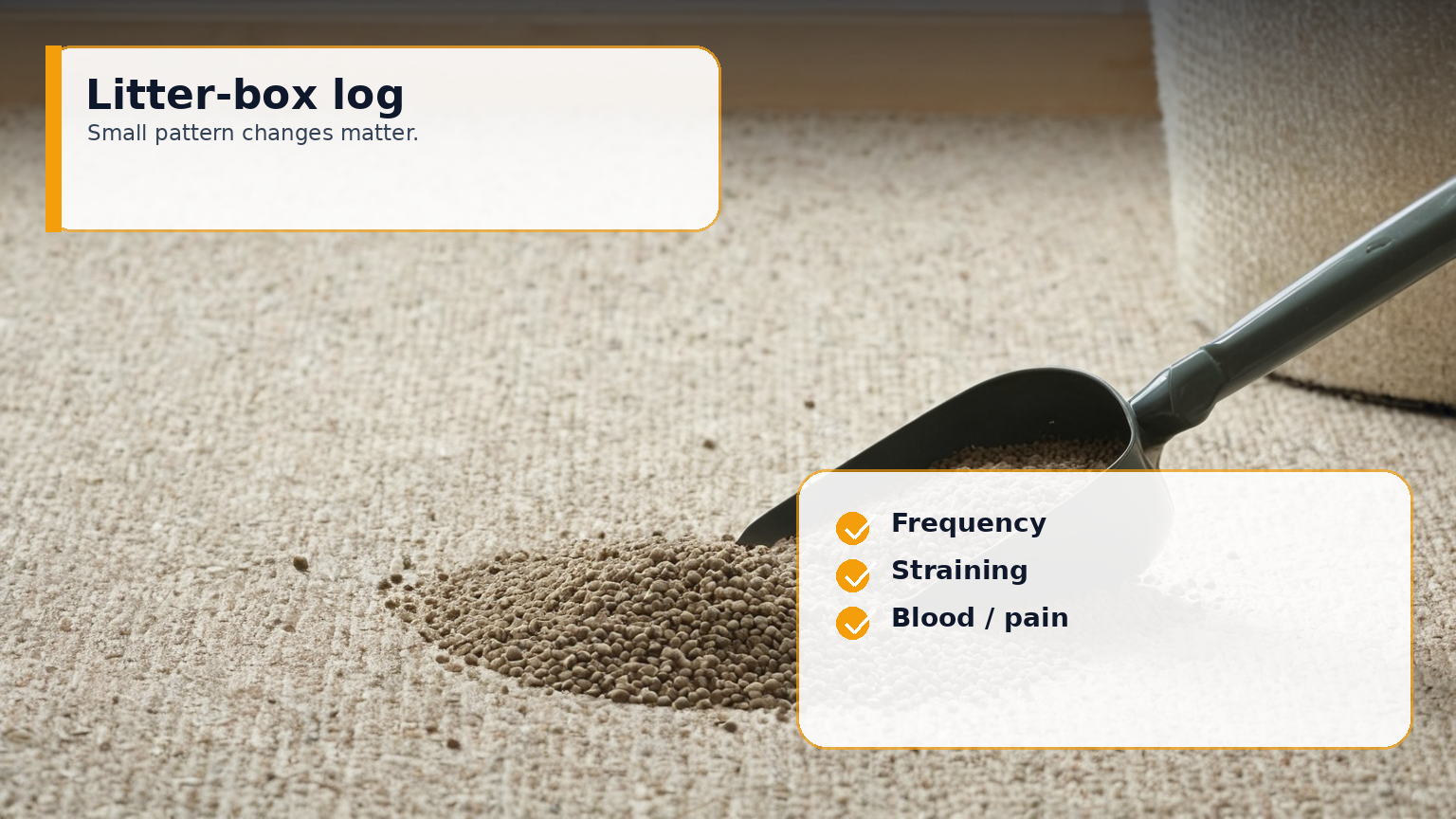
You do not need a complicated app. For two weeks, note the normal number of urine clumps, approximate clump size, and any behavior changes. The baseline matters because cats vary. A cat who usually urinates twice daily and suddenly visits the box seven times is telling you something even if each trip looks small.
Red flags include repeated trips with little urine, crying, blood, licking the urinary opening, hiding, vomiting, weakness, or a tense painful belly. Male cats deserve extra caution because obstruction can progress quickly.
Step 4: decide before the emergency
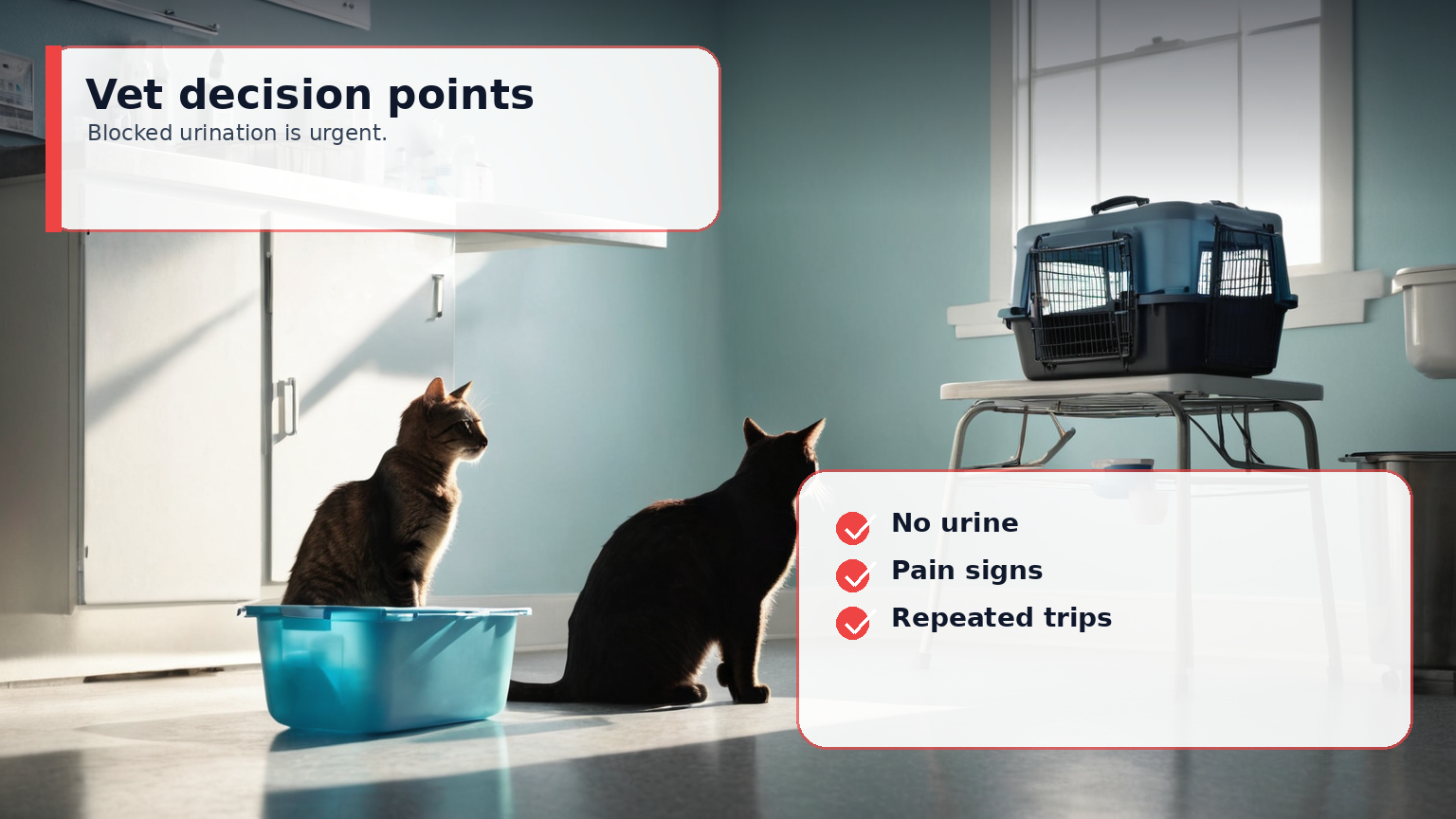
Use this decision tree:
- Normal appetite, normal urine, just low interest in one bowl: add a second water station and clean the setup.
- Mild change in clump size or frequency: call your regular vet, especially if it lasts more than a day.
- Straining, pain, blood, or repeated box trips: same-day veterinary advice.
- No urine, vomiting, severe lethargy, collapse, or a painful belly: emergency clinic now.
Practical setup checklist
- Put at least two water stations in different rooms.
- Keep one station away from food if your cat prefers separation.
- Wash bowls daily; deep-clean fountains routinely.
- Consider wet food or mixed feeding only with a gradual transition.
- Keep a two-week litter baseline for older cats or cats with previous urinary signs.
- Save your regular vet and emergency clinic numbers before you need them.
Hydration is not a cure-all, but it is a high-leverage routine: low drama, low cost, and easy to combine with veterinary care when something changes.