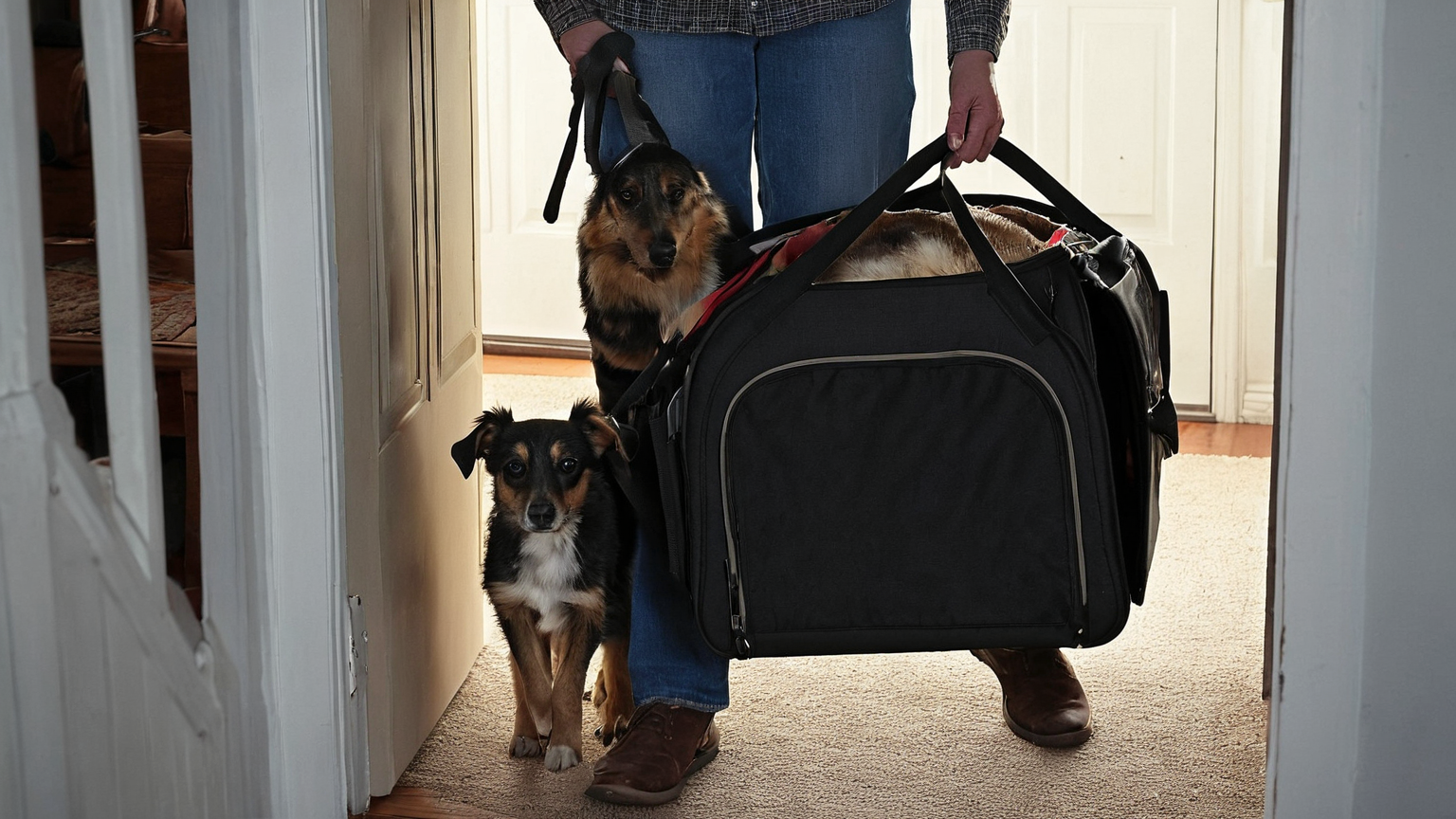
Pet Emergency Foster Care Handoff Plan for 2026
A practical pet-safety handoff for temporary foster care, evacuation, medication notes, routines, and veterinarian escalation during a family emergency.
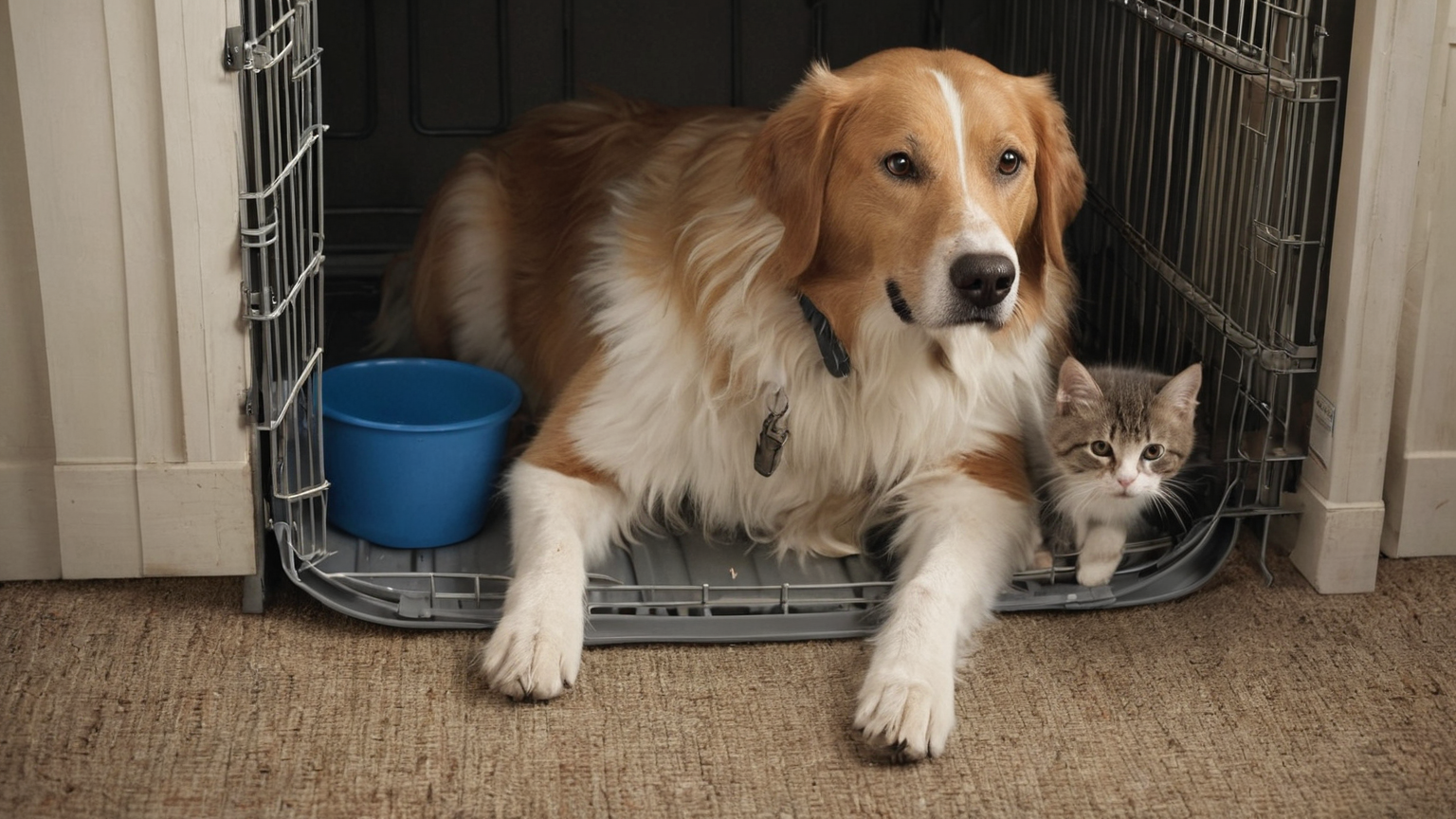
This guide helps an owner prepare a short emergency handoff for a trusted foster caregiver. It focuses on identification, feeding, medication, behavior, safe housing, veterinary contacts, and the limits of the caregiver’s authority. The as-of date is 2026-06-24. Clinic instructions, boarding rules, disaster shelter policies, and the pet’s medical needs can change, so confirm them before the handoff.
Why a foster handoff plan belongs in a pet emergency kit
An evacuation kit helps you leave quickly, but many real emergencies are less dramatic: a hospital stay, a family caregiving trip, a broken furnace, a landlord repair, or a local shelter capacity problem can all require a pet to stay with someone else for a few nights. The safest plan is written before stress starts. It tells a foster helper what the pet eats, what the pet must avoid, who can authorize care, and when a veterinarian should be called. That keeps the helper from improvising with internet advice or guessing from memory.
The one-page decision table
| Situation | Best temporary option | Why it fits | Escalation trigger |
|---|---|---|---|
| One night away with stable pet | Known neighbor or family helper | Lowest routine disruption | Pet refuses food, hides, coughs, limps, or has medication issue |
| Multi-day evacuation | Pre-arranged foster home outside the affected zone | Separates pet care from shelter logistics | Water/heat/power interruption reaches the foster home |
| Pet has daily medication | Helper who has practiced dosing once | Reduces missed-dose risk | Vomiting, sedation, seizure, breathing change, or missed dose |
| Reactive dog or fearful cat | Quiet single-pet room with written handling rules | Prevents bites, escapes, and stress stacking | Escape attempt, bite incident, or inability to handle safely |
Build the handoff packet in layers
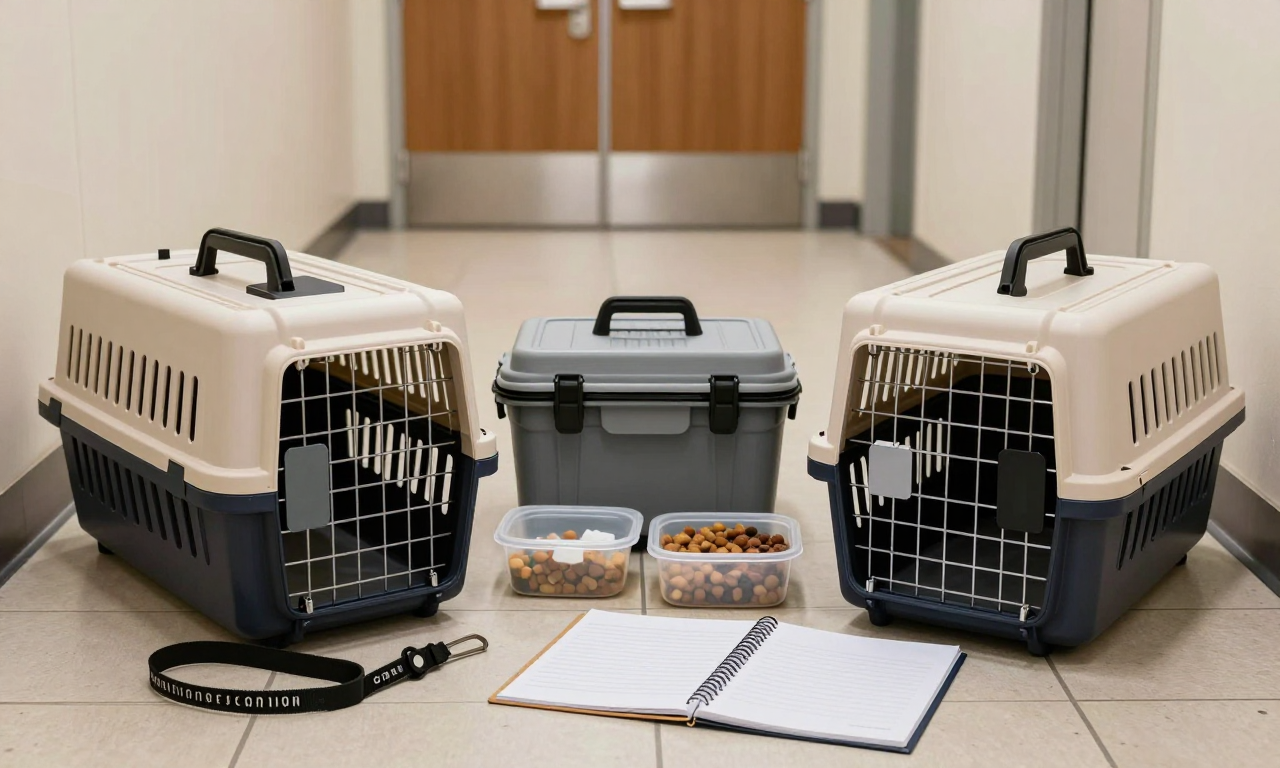
Start with identity: pet name, species, age, weight range, microchip number if available, veterinarian, emergency clinic, insurance or payment instructions, and two reachable people. Add a daily routine that a tired helper can follow: morning food amount, evening food amount, walk or litter schedule, sleep location, safe treats, words the pet understands, and known fears. Put the most important medical instructions in a separate top box. If your dog cannot take a common medication or your cat has urinary symptoms that require same-day care, that warning should not be buried on page three.
Medication and diet rules need exact boundaries
Do not write “give usual meds” unless the helper already knows the schedule. List medication name, dose, time, whether food is required, what to do if a dose is late, and what not to double. If the pet eats prescription food, pre-pack at least three days in labeled containers but keep the written plan free of private account passwords or payment card numbers. For pets with allergies or pancreatitis history, state the safe-treat rule plainly: no table scraps, no new chews, and call the owner or vet before substitutes.
A safe foster home checklist
- Doors and windows latch before the carrier opens.
- Other pets are separated until a calm introduction is planned.
- Trash, medicines, cleaning products, cords, toxic plants, and small toys are out of reach.
- The pet has a quiet zone with water, bedding, and a hiding option.
- The helper has a leash, harness, carrier, litter, waste bags, and cleaning supplies.
- A photo of the pet is saved in case of escape.
- The helper knows which clinic to call after hours.
Handoff script for the first ten minutes
Use a calm, repeatable script. Show the helper how the harness fits, where the carrier opens, how the pet is usually picked up or not picked up, and what behavior means “give space.” For cats, open the carrier in the prepared room, not in a hallway. For dogs, keep the leash attached until doors are closed. If the pet is nervous, the goal is not social bonding on day one; it is safe containment, water, food, elimination, and predictable quiet.
When the helper should call a veterinarian
The foster helper should not be asked to diagnose. Give concrete call-now triggers: repeated vomiting or diarrhea, collapse, trouble breathing, seizure, pale gums, inability to urinate, painful crying, suspected toxin exposure, heat stress, a bite wound, medication overdose, or a known chronic-condition flare. Add individualized thresholds supplied by the regular veterinarian for diabetes, heart disease, recent surgery, or other conditions. Write which clinic to call first and where the carrier and records are stored.
Define the helper’s authority before the emergency
Ask the regular clinic how it records permission for another adult to seek care. Write the helper’s authority in plain language: whether the helper may approve an examination, diagnostics, hospitalization, or treatment up to a stated limit; who must be called; and what to do when the owner cannot be reached. This is not a substitute for the clinic’s consent rules. Keep payment credentials private and arrange the clinic’s accepted payment or deposit method directly.
Printable foster handoff table
| Handoff field | What to write | Why it matters |
|---|---|---|
| Daily food and water | Amount, time, safe treats, and forbidden foods | Prevents digestive upset and allergy mistakes |
| Medication | Name, dose, time, late-dose rule, and vet trigger | Reduces missed or doubled doses |
| Handling | Leash, carrier, pickup, hiding, and door rules | Prevents escapes and bites |
| Emergency contacts | Owner, backup, regular vet, emergency clinic | Gives the helper a clear escalation path |
| Return plan | Pickup date, key exchange, and supply checklist | Avoids confusion when the emergency ends |
Quick implementation checklist
- Print the daily-care page and the medical escalation page.
- Ask the chosen helper to perform one calm feeding, leash, carrier, or medication rehearsal.
- Confirm the regular veterinarian, emergency clinic, owner, and backup contact numbers.
- State door, separation, handling, food, and medication rules without abbreviations.
- Store authorization and payment arrangements using the clinic’s approved process.
- Date the packet and review it after any health, diet, address, or caregiver change.
FAQ
How long should the packet be?
One page for daily care plus one page for medical and contact details is enough for most pets. Add condition-specific notes only when they change care.
Should I include payment information?
Give authorization boundaries and clinic contact information, but avoid writing card numbers or account passwords in a packet that may be copied.
What if my pet cannot safely stay with another household pet?
State that clearly and choose a single-pet room, professional boarding, or veterinary boarding before an emergency forces a rushed introduction.
Source notes
The cited emergency-preparedness, veterinary, animal-welfare, and public-health sources support different parts of the handoff. Local clinic instructions and the individual pet’s medical plan take priority when they are more specific. Save a copy of the clinic’s current after-hours directions with the packet, because a general article cannot determine treatment or consent requirements for a particular animal.
Extra planning worksheet
Use a three-column worksheet labeled routine, exception, and action. Under routine, record the exact food portion, walk or litter timing, sleep location, medication schedule, and handling cues observed at home. Under exception, describe a concrete change such as refusing two meals, hiding longer than usual, a missed dose, diarrhea, an escape attempt, or conflict with another animal. Under action, name the person or clinic to contact and the safe step the helper may take while waiting. Keep each row short enough to scan on a phone.
Test the worksheet during a five-minute rehearsal. Ask the helper to locate the leash or carrier, measure one meal, identify the correct medicine without opening it, and point to the emergency numbers. If the helper needs an explanation that is not written down, revise that row. Do not add unrelated documents simply to make the packet look complete; the goal is a usable transfer of pet care.
Maintenance review cadence
After the first practice stay, record what the pet ate, where the pet slept, which door or stair caused hesitation, whether the leash or carrier could be used without rushing, and whether every medicine instruction was unambiguous. Rewrite any line that prompted a phone call. Replace stale vaccine evidence, clinic details, food portions, and medicine schedules promptly.
Inspect the physical supplies at the same time. Check carrier latches, harness fit, identification tags, food expiration, litter or waste supplies, and the amount of prescription food and medicine available. Keep the packet beside the carrier only if private financial and identity details are stored elsewhere. A helper should be able to provide safe routine care for at least the expected handoff period while knowing exactly when written instructions stop and veterinary care begins.
Plan the return handoff
Write the expected pickup date, who may retrieve the pet, and how keys, medicine, records, and remaining supplies will be returned. At pickup, compare doses and food used with the schedule, ask about appetite, drinking, elimination, sleep, coughing, limping, hiding, conflict, or escape attempts, and preserve any clinic discharge instructions. Contact the veterinarian when the log shows a medical trigger rather than waiting for the next routine visit.
If the emergency continues, extend care deliberately. Confirm that the helper is still available, replenish the exact food and medicine, revisit the spending authorization, and identify a second placement before the first one fails. Never transfer the pet to another household without giving the new caregiver the same handling, separation, medication, and clinic instructions.
Visual walk-through