Cat Wildfire Smoke Indoor Safety Plan: Clean Air, Carriers, and Vet Escalation
A practical 2026 cat wildfire-smoke guide covering clean rooms, air purifiers, evacuation kits, symptom watch, and when to call a veterinarian.
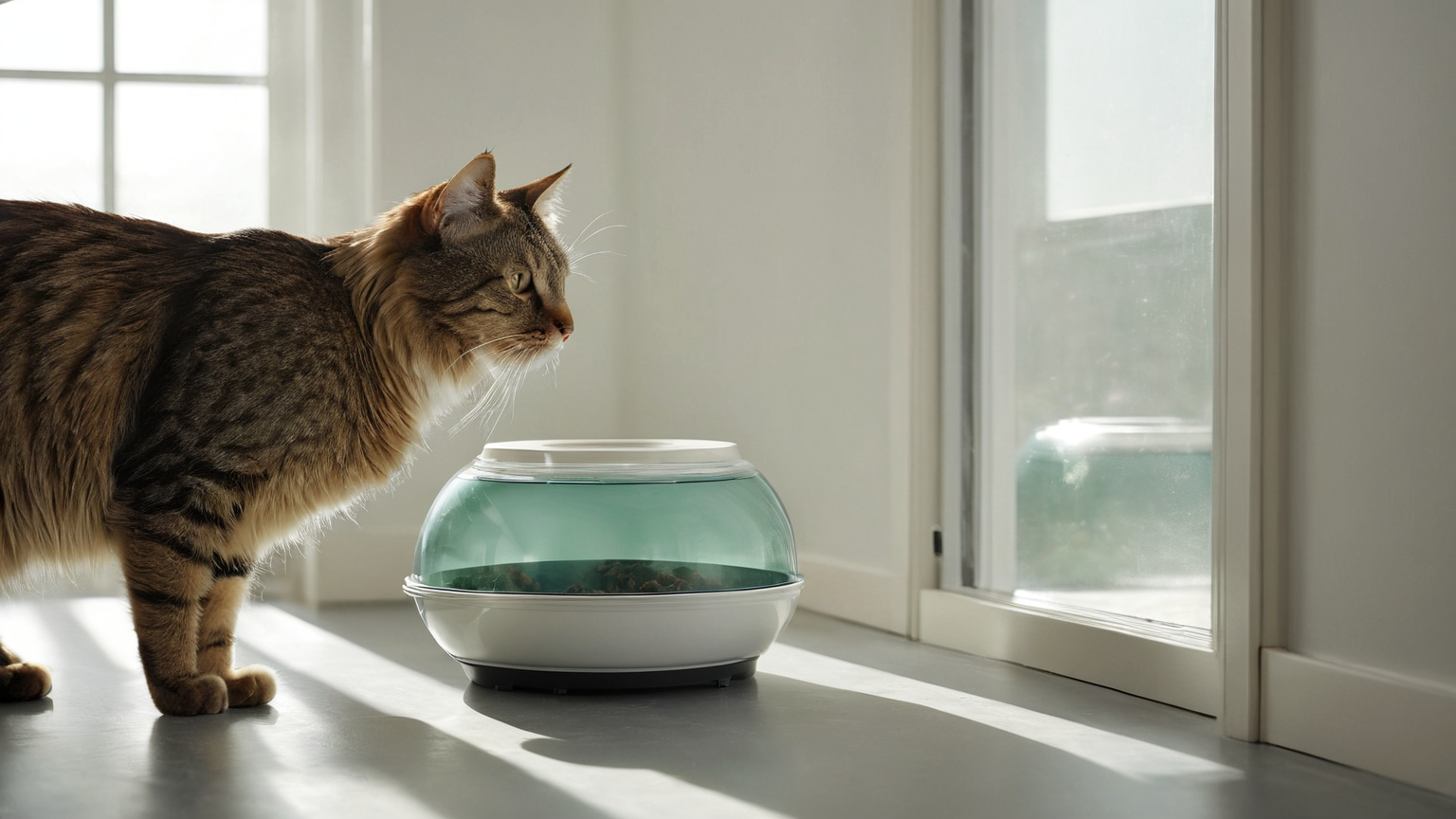
Updated May 31, 2026. Wildfire smoke advice changes with local air quality, evacuation orders, and your cat’s health history. Use official alerts first, and call your veterinarian early for kittens, seniors, brachycephalic cats, cats with asthma, heart disease, or any cat showing breathing difficulty.
Wildfire smoke planning for cats is a home-operations problem: keep particles out, clean the air in one reliable room, make evacuation boring instead of chaotic, and know which symptoms are not wait-and-see. Cats often mask illness, so a plan that depends on noticing dramatic distress is too late. Build a routine you can start the same morning smoke appears.
The smoke-day decision table
| Decision | Safer default | Escalate when |
|---|---|---|
| Outdoor access | Keep cats indoors; close windows and catios | Local officials issue evacuation or hazardous air warnings |
| Clean room | One interior room, closed door, filtration, water, litter | Indoor smoke odor persists or purifier cannot keep up |
| Carrier | Out and open before alerts | Cat hides, panics, or needs medication transport |
| Health watch | Track breathing, appetite, energy, eye/nose irritation | Open-mouth breathing, collapse, severe lethargy, blue/pale gums |
| Vet call | Call early for high-risk cats | Symptoms are severe, worsening, or not improving indoors |
Step 1: make one clean-air room before the house smells smoky
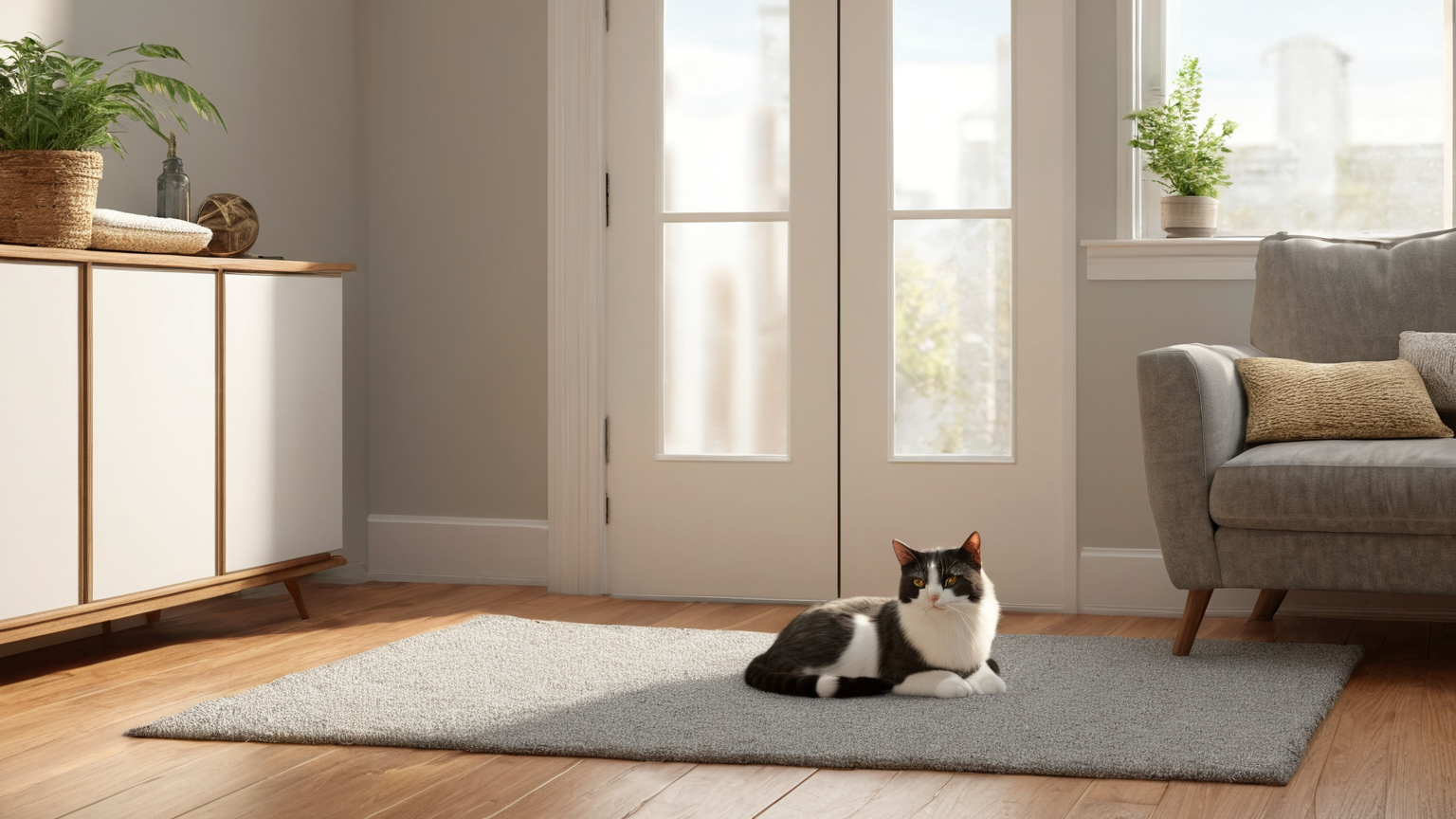
Choose a room that can be closed off and kept comfortable: bedroom, office, or interior room with few exterior doors. Close windows, avoid candles and frying, and run a properly sized purifier if available. The EPA’s clean-room concept is simple: reduce particle entry and continuously filter the air in the space where vulnerable people or animals spend the most time. For cats, add litter, water, food, a familiar bed, and hiding options so the room is not a punishment.
Do not create heat stress while chasing air quality. If you must close windows on a hot day, monitor temperature and use safe cooling. A stressed cat in a hot sealed room is not protected. Keep cords secured, purifier intakes unobstructed, and doors latched so the cat does not escape during repeated household checks.
Step 2: prepare the carrier as living equipment, not emergency equipment
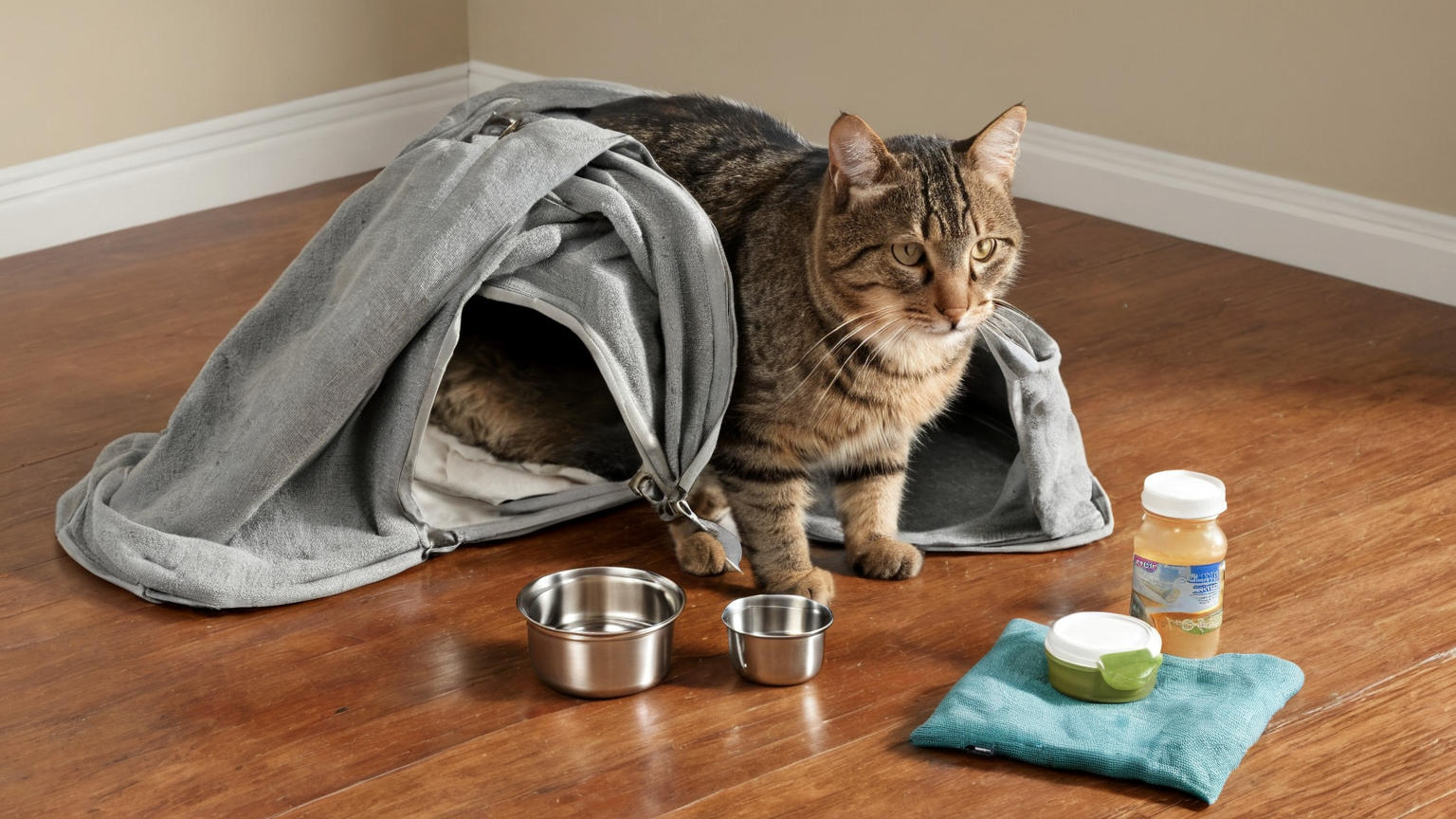
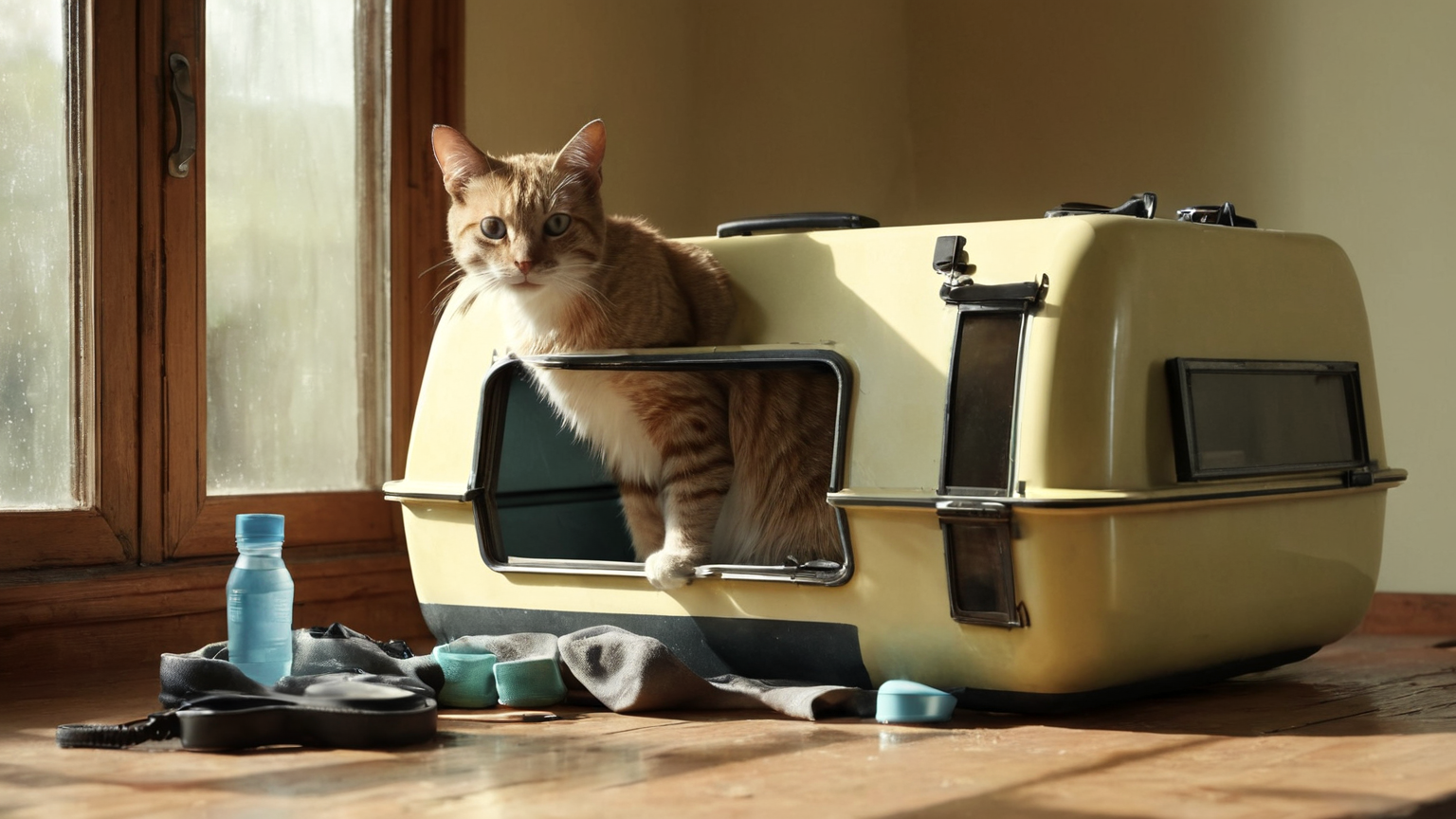
The most common failure point is the carrier. Put it out now, add familiar bedding, and feed occasional treats near it. Tape a small card to the outside with your phone number and veterinarian’s name, but keep private details off visible photos or public posts. Pack a leash/harness if your cat uses one, medication, food, water, copies of records, and a recent photo.
If evacuation becomes possible, move the cat into the clean room with the carrier before the household becomes noisy. Close hiding spots that are unsafe to reach. The goal is not to scare the cat into the carrier; it is to make the carrier the easiest hiding place.
Step 3: watch the cat, not just the air-quality number
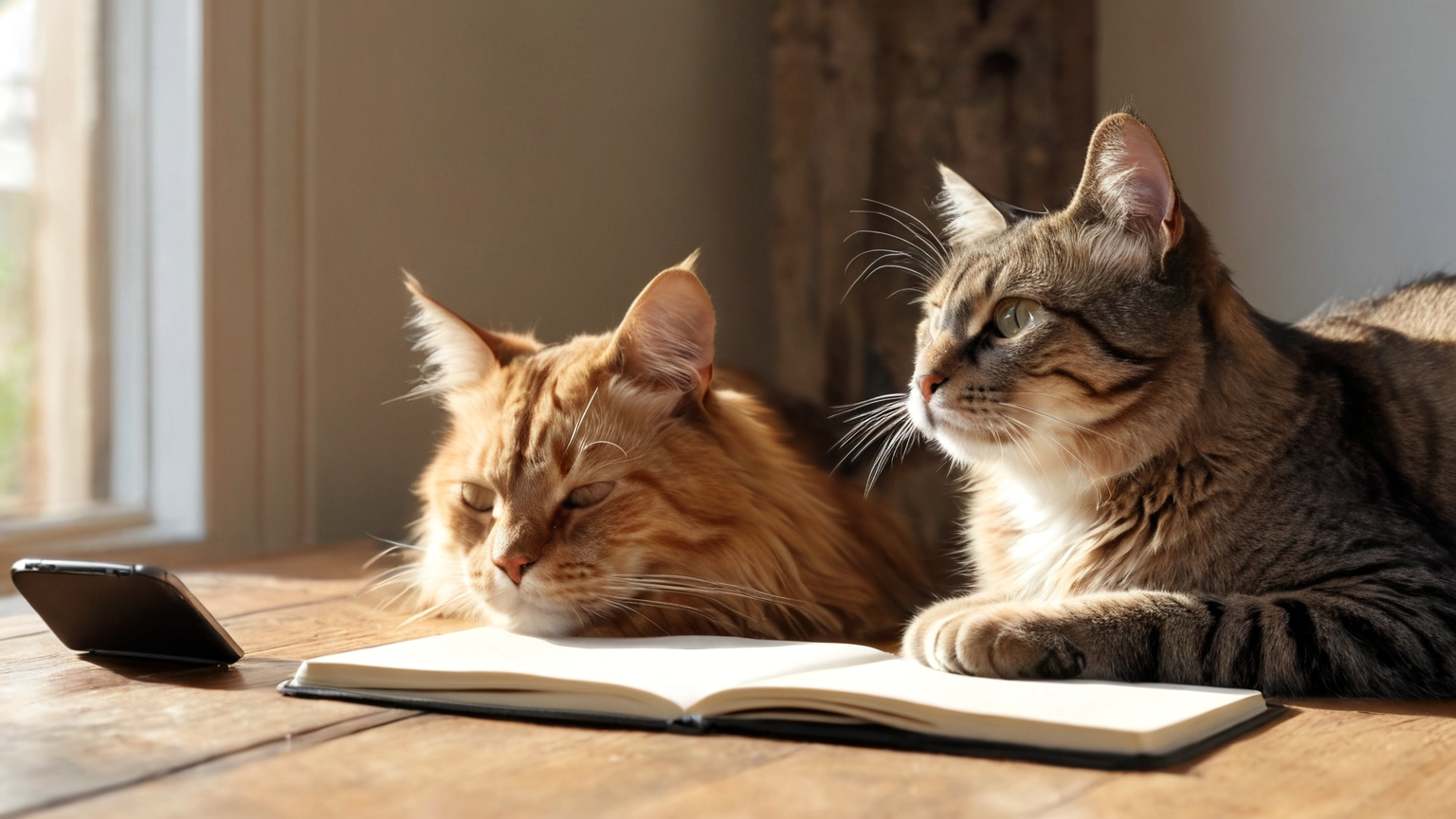
Air-quality maps are useful, but your cat’s body is the final signal. Watch resting breathing effort, not only speed. Concerning signs include open-mouth breathing, exaggerated belly movement, coughing, wheezing, drooling from distress, weakness, stumbling, refusal to eat in a normally food-motivated cat, eye discharge, or behavior that is very different from baseline.
Use a two-minute log: time, room, purifier on/off, appetite, water, litter use, breathing notes, medication given, and who you called. This prevents duplicate dosing and helps the clinic triage. Do not give human cough, allergy, or pain medication unless your veterinarian specifically prescribes it.
Step 4: reduce indoor smoke sources you control
During smoke events, avoid vacuuming without HEPA filtration, burning candles, using fireplaces, spraying fragrances, or running appliances that add particles indoors. Wipe paws and fur gently if the cat had brief outdoor exposure, but do not bathe a stressed cat unless directed. Keep litter clean because ammonia and dust can irritate airways.
Step 5: know the call-now threshold
Call a veterinarian or emergency clinic for breathing difficulty, open-mouth breathing, collapse, severe lethargy, blue or pale gums, persistent coughing/wheezing, burns, or smoke exposure from an actual fire. Also call early for cats with asthma, chronic bronchitis, heart disease, very young or old age, or recent surgery. Waiting for a cat to “look worse” can be dangerous because cats hide respiratory distress.
15-minute setup checklist
- Close windows, exterior doors, fireplace dampers, and unused vents where appropriate.
- Start filtration in one cat-safe room.
- Move water, food, litter, bedding, medication, and carrier into that room.
- Charge phone and keep the vet/emergency clinic number visible.
- Confirm evacuation routes and pet-friendly lodging options.
- Log symptoms twice daily, or more often if the cat is high-risk.
FAQ
Can I use a box fan filter for a cat room?
Only use a safe design you can supervise, with stable placement and no exposed hazards to the cat. A commercial purifier is often simpler. If any improvised setup overheats, tips, or attracts chewing, stop using it.
Should I put a mask on my cat?
No. Masks are not practical or safe for most cats and can increase panic. Focus on indoor air control, carrier readiness, and veterinary advice.
When can routines return to normal?
Wait until official guidance and local conditions improve, then reopen gradually. Continue watching high-risk cats because irritation can linger after the smoke smell fades.