Recognizing Dog Seizures: What to Time, Record, and Tell the Veterinarian
A veterinary-source guide to seizure first aid, exact emergency signs, useful video and episode logs, and safe transport decisions for dogs.

Watching a dog suddenly fall, stiffen, paddle, stare, twitch, or become unresponsive is frightening. The useful household job is not to name the event in real time. It is to protect the dog from nearby hazards, start a timer, observe without unsafe restraint, and know when to leave for emergency care. The Merck Veterinary Manual overview explains that seizures can have structural, metabolic, toxic, or unknown causes. A visible episode alone cannot establish epilepsy or reveal its cause.
This guide is for recognition, documentation, and transport decisions. It does not diagnose a seizure, distinguish epilepsy from every look-alike, recommend a drug, or provide a rescue-medication dose. If a veterinarian has already created an individual emergency plan, use that written plan. Do not substitute internet instructions, another animal’s medication, a leftover prescription, or a calculated dose.
First response: make space, start the clock
As soon as an episode begins, look at a clock or start a phone timer. People commonly overestimate or underestimate duration during a stressful event, and the measured length changes triage. Move chairs, cords, sharp objects, and other pets away if this can be done without reaching near the dog’s mouth. Block access to stairs, a pool, fire, traffic, or a drop. Dim stimulation if practical, but do not delay safety actions to perfect the room.
Do not put fingers, a spoon, food, water, or any object in the mouth. Do not pull the tongue. Do not pin the dog down, try to stop paddling, shout, shake the dog, or carry a large actively convulsing dog unless remaining in place creates a greater immediate hazard. Involuntary jaw movement can cause a severe bite even in a gentle dog. The University of Illinois veterinary guidance on seizures in pets likewise emphasizes protecting the animal from injury rather than restraining it.
If another adult is present, one person can time and observe while the other clears the area and calls. Keep children and other animals out. If the episode ends quickly, continue observing from a safe distance: temporary confusion, pacing, restlessness, hunger, thirst, apparent blindness, weakness, or unusual behavior can occur after a seizure. A disoriented dog may not recognize a familiar person and may bite defensively. Give the dog quiet space and prevent wandering into hazards.
Exact signs that mean emergency care now
The current ACVIM consensus statement on status epilepticus and cluster seizures defines status epilepticus operationally as continuous seizure activity lasting more than five minutes, or two or more seizures without recovery of consciousness between them. It defines cluster seizures as more than two self-limiting seizures within 24 hours. These are clinical emergency patterns, not targets to watch for at home.
Begin emergency-veterinary contact and transport immediately if any of the following occurs:
- active seizure activity reaches five minutes; call sooner while preparing rather than waiting for the timer to cross five;
- another seizure begins before the dog meaningfully recovers consciousness;
- the dog has more than two self-limiting seizures within 24 hours, even if recovery appears complete between them;
- breathing is labored or absent, gums or tongue appear blue-gray, or the dog remains unresponsive;
- the episode causes major trauma, uncontrolled bleeding, a fall, possible drowning, or suspected overheating;
- toxin exposure, medication ingestion, electrocution, head injury, or another acute illness may be involved;
- the dog is pregnant, recently gave birth, is a very young puppy, or has a known condition for which the veterinarian instructed immediate escalation;
- the dog’s condition is worsening rapidly or you cannot keep the scene safe.
A first suspected seizure warrants prompt veterinary contact even if it is brief and the dog seems to recover. Ask the clinic whether the dog needs emergency examination or a same-day appointment; age, history, exposures, recovery, and access to care affect that decision. Cornell’s guide to managing seizures advises owners to record duration and contact a veterinarian, while emphasizing emergency attention for prolonged or repeated events.

What to observe without trying to diagnose
The International Veterinary Epilepsy Task Force provides standardized definitions and classification, including focal and generalized seizure features. Those terms help clinicians communicate; they are not a home certification system. Syncope, movement disorders, pain, vestibular episodes, sleep behaviors, tremors, toxin effects, and other problems can resemble parts of a seizure.
Record plain observations instead of labels. “Left facial twitching for 20 seconds, then the dog fell onto the right side and paddled” is more useful than “a focal seizure became generalized” unless a clinician has already characterized that pattern. Useful details include:
- what the dog was doing immediately before onset—sleeping, exercising, eating, waking, playing, or taking medication;
- the first change noticed, including staring, lip movement, facial twitching, sudden fear, collapse, stiffening, or loss of response;
- whether the dog remained standing, fell, stiffened, paddled, trembled, vocalized, drooled, urinated, defecated, or vomited;
- whether movements involved the whole body or one side, limb, or facial region;
- whether the dog responded to its name or gentle environmental cues from a safe distance;
- the timed start and stop of abnormal movement and the time meaningful awareness returned;
- behavior during recovery, including pacing, confusion, apparent vision trouble, weakness, hunger, thirst, aggression, or sleep;
- possible exposures, recent illness, trauma, diet changes, medications, preventives, or supplements.
Do not test awareness by clapping near the ears, touching the face, opening the mouth, or creating pain. Observation should not increase danger or distress.
A practical episode log
Use one row per event. Preserve uncertainty rather than filling gaps from memory.
| Log field | Write this | Avoid this |
|---|---|---|
| Date and clock time | “Aug 21, 2:14 a.m.” | “sometime overnight” |
| Active-event duration | timer start to visible event end | guessing after the emergency |
| Recovery duration | event end to recognizable awareness or usual behavior | combining it with active seizure time |
| First observed sign | exact movement or behavior | diagnostic shorthand only |
| Body pattern | side, limb, face, stiffening, paddling, collapse | “typical seizure” |
| Responsiveness | what cue was present and observed response | unsafe touching or pain tests |
| Context | sleep, exercise, meal, medication, possible exposure | assuming a trigger caused it |
| After-effects | confusion, pacing, vision concern, weakness, appetite | “fine” without a time point |
| Video | file name and whether complete or partial | editing away the beginning or recovery |
| Action | clinic called, advice received, departure and arrival times | undocumented medication changes |
Keep the original clock times as well as durations. For example: visible stiffening began at 2:14:10, stopped at 2:15:02, and the dog recognized a caregiver at 2:19. This separates a 52-second motor event from several minutes of post-event recovery. It does not prove which process occurred, but it gives the veterinarian a usable sequence.
A monthly total can be calculated as number of episodes recorded during the month, but it is not a severity score. Frequency, duration, recovery, injury, clustering, treatment, and quality of life all matter. Never wait to complete a monthly total when an emergency threshold has already been reached.
Video can help, but safety outranks footage
If the scene is safe and another adult is handling timing and hazards, a short video may show the first affected body part, symmetry, awareness, sounds, and recovery. Film from a distance. If possible, briefly include a clock or state the elapsed time aloud. Continue a few seconds after visible movement stops so the clinician can see early recovery.
Do not move close to the mouth, reposition the dog for a better angle, turn on harsh lights, delay a call, or remain in an unsafe location to record. A partial video is still useful when paired with written times. Preserve the original file; editing, filters, speed changes, and cropped audio can remove context.
Texas A&M’s veterinary resource on seizures in dogs notes that videos can assist the veterinarian because seizure-like conditions may be difficult to distinguish from descriptions alone. A video supports clinical reasoning; it cannot prove epilepsy, identify a toxin, exclude heart disease, or replace examination and testing.

Transport decision table
Call the nearest open veterinary service when uncertain. The clinic may upgrade any category based on the dog’s history or current condition.
| Situation | Household action | Transport notes |
|---|---|---|
| Active event approaching five minutes | Call emergency hospital and prepare to leave now | Do not wait for five minutes to start planning |
| Five minutes of activity, repeated event without recovery, or more than two events in 24 hours | Emergency transport now | Call ahead; use the dog’s prescribed plan only if already directed |
| Breathing difficulty, blue-gray gums, severe injury, toxin concern, heat exposure, or rapid decline | Emergency transport now | Tell staff the suspected exposure or injury before arrival |
| First brief suspected seizure with apparent recovery | Contact veterinarian promptly for triage | Follow their emergency versus same-day direction |
| Previously evaluated dog, one brief event, full recovery, below the clinician’s written threshold | Follow the individual written plan and log | Call if the pattern differs or instructions are unclear |
| Uncertain episode but persistent collapse, weakness, confusion, pain, or abnormal breathing | Urgent veterinary contact; be ready to transport | A non-seizure emergency can still be life-threatening |
This table is a decision aid, not a prediction of outcome. Distance, traffic, and the absence of an ideal carrier do not make prolonged activity safe to observe. Conversely, a short episode does not guarantee a harmless cause.
Prepare and move without creating another injury
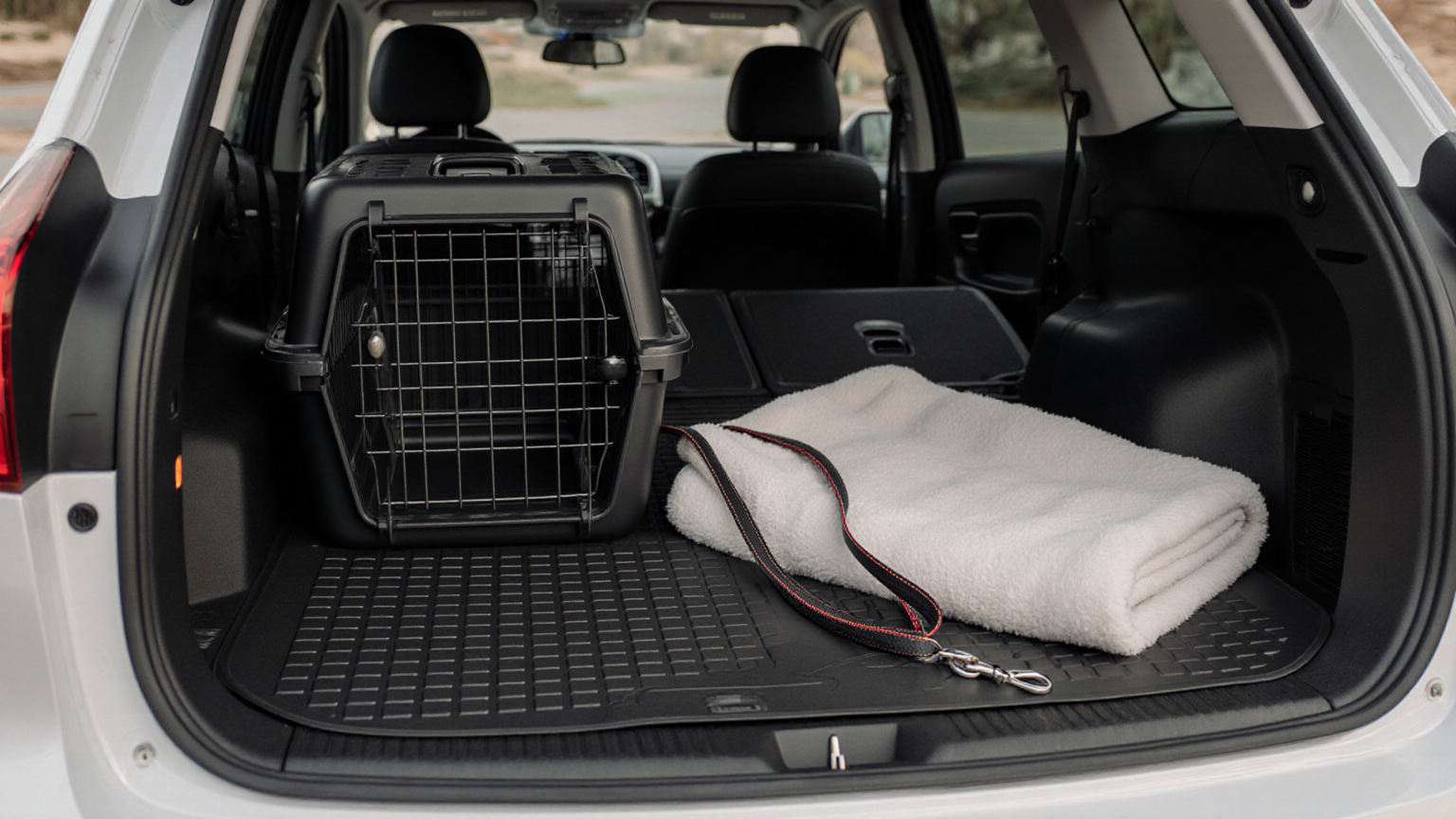
Before an emergency, store the nearest 24-hour hospital’s phone number, address, after-hours entrance, and a backup facility. Keep a leash, harness, nonslip blanket, current medication list, and key medical information accessible. The pet emergency go-bag guide can organize records, but do not delay departure to pack optional items.
Once active convulsions stop, use a leash or harness only if the dog can move safely. A weak large dog may need a blanket and two adults for level support; keep faces away from the mouth and avoid twisting the neck or spine after a fall. Do not muzzle an actively seizing, vomiting, poorly responsive, or breathing-compromised dog. Ask emergency staff for handling instructions if aggression, trauma, or body size makes loading unsafe.
In the vehicle, prevent falls and keep the area ventilated. One adult should drive; another can observe and update the hospital if available. Do not drive dangerously, hold the dog in the front seat, or attempt treatment while driving. If another episode begins, the passenger should time it and call the hospital. If alone and unable to proceed safely, stop in a safe location and call for veterinary direction or another driver.
The emergency foster-care handoff plan can help assign another adult to children or other animals. The GDV transport article offers broader vehicle preparation, but suspected seizure and suspected bloat have different signs and must not share home-treatment steps.

What to tell the veterinarian
Lead with the facts that change triage: “The event started at 7:42 p.m., has continued for four minutes, and the dog has not regained awareness,” or “This is the third self-limiting event in six hours.” Then provide age, approximate weight, known diagnoses, current prescriptions, last confirmed doses, possible missed or duplicate doses, toxin or medication access, recent trauma or illness, pregnancy or recent whelping, and estimated arrival time.
Bring the log and original video. Bring medication containers or clear label photos if immediately available, especially after possible ingestion, but do not expose yourself to chemicals or delay transport to collect packaging. Never induce vomiting, give food or water to a poorly responsive dog, apply essential oils, use human medication, or administer an extra antiseizure dose unless a veterinarian has specifically prescribed and documented that action for this dog.
The Task Force diagnostic approach for canine epilepsy describes a staged process using history, examination, laboratory assessment, and, when indicated, advanced testing. Age at onset and findings between episodes help guide that workup, but no age range or normal-looking recovery permits a home diagnosis of idiopathic epilepsy. Be ready to discuss travel, toxins, diet, preventives, supplements, prior events, family history if known, and changes between episodes.
After evaluation: keep treatment boundaries clear
If ongoing medication or an at-home rescue plan is prescribed, ask for the exact product, route, storage, expiration checks, circumstances for use, maximum actions before transport, and what to do after use—in writing. Confirm which clinic to call after hours and whether every rescue use requires evaluation. This article intentionally gives no dose because safe instructions depend on the individual dog, product, route, other medicines, and clinician’s plan.
The Task Force consensus on medical treatment of canine epilepsy discusses treatment decisions and monitoring at the population level. It is not a prescription. Do not stop long-term antiseizure medication abruptly, repeat a dose after vomiting, “top up” after an event, or change timing based on an online chart. Contact the prescribing clinic about missed doses, adverse effects, refill gaps, vomiting, appetite changes, or uncertainty.
Keep all medications away from children and animals, in original labeled packaging where appropriate. Record actual administration only after it occurs. If several caregivers help, use one shared log to prevent accidental duplicate dosing. During outages or travel, the site’s emergency medication-planning resources can support logistics, but the prescriber remains the source for drug-specific decisions.
Important limitations
A household description may miss subtle onset, and a camera may not show breathing, gum color, pulse, temperature, exposure, or neurologic status. Event duration does not identify cause. Urination, drooling, paddling, stiffening, or temporary confusion may support concern but is not unique to epilepsy. A dog can also have a dangerous metabolic, toxic, cardiac, or intracranial problem and appear nearly normal between events.
The emergency thresholds above prioritize avoiding delay; they do not estimate prognosis or guarantee that a shorter, isolated event is safe. Veterinary teams may recommend earlier action for an individual dog. Follow the treating clinician’s plan when it is more cautious. If heat exposure or a hot environment is involved, call urgently and use only professional guidance; do not assume the steps in the heatstroke first-aid guide replace seizure triage.
A one-minute household checklist
- Start a timer at the first observed abnormal event.
- Clear hazards; do not restrain or put anything in the mouth.
- Keep people and other animals at a safe distance.
- Record direct observations, not a home diagnosis.
- Film only when doing so does not delay safety, calling, or transport.
- Treat five minutes, no recovery between seizures, or more than two seizures in 24 hours as emergency patterns.
- Escalate immediately for breathing or gum-color changes, serious injury, toxin concern, heat exposure, or rapid worsening.
- Use only the individual veterinarian’s written medication plan; never invent or borrow a dose.
- Bring clock times, recovery details, medication information, exposure history, and the original video.
The best record is not the longest. It is a safe, timed, factual account that helps a veterinary team understand what happened and how urgently the dog needs care.